Nandaimon Gate
Good to know before you go
- Getting there
- Kintetsu-Nara Station · 20 min walk (Kintetsu Nara Line)
- Admission
- Free
- Time needed
- 10–20 min
- Best time to go
- Early morning before 8:30, when school trips and tour groups have not arrived, or evening during the year-round illumination
About
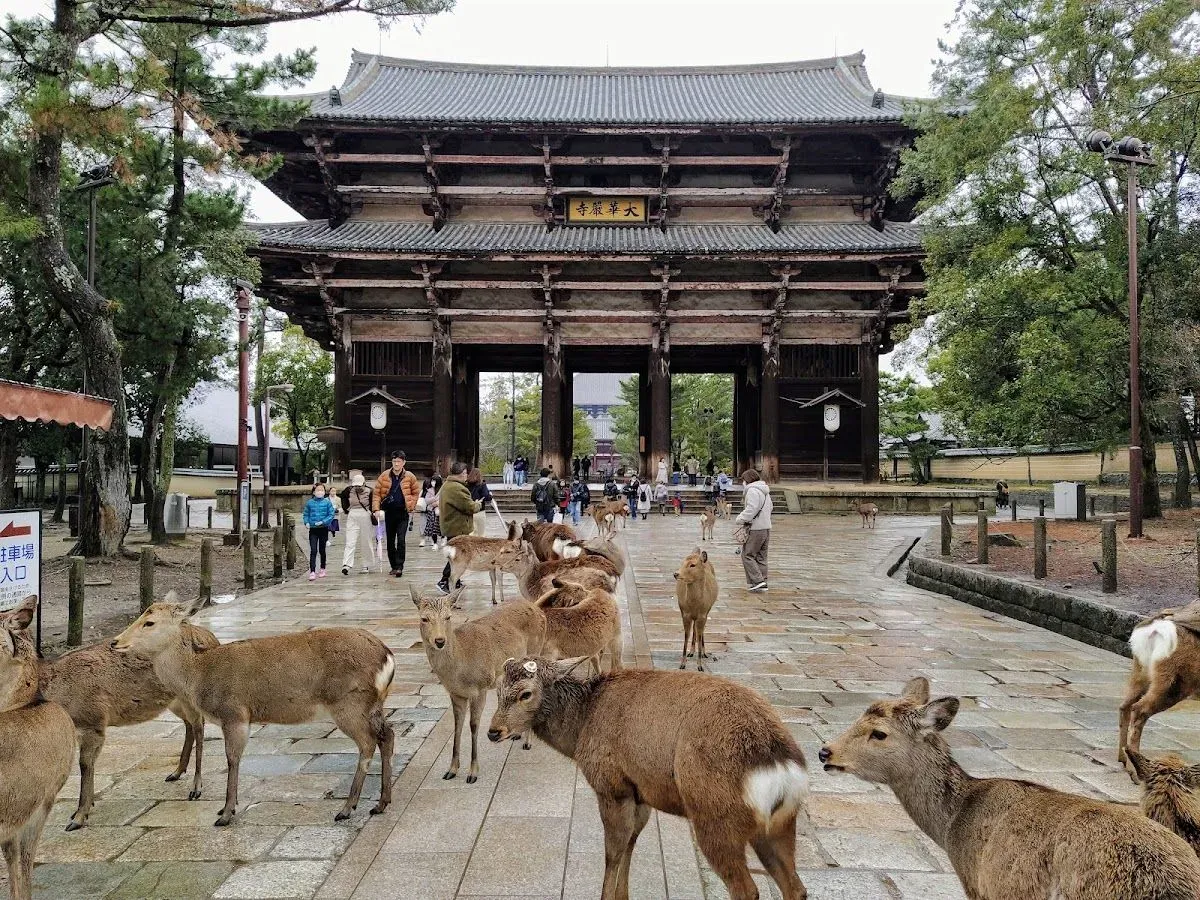
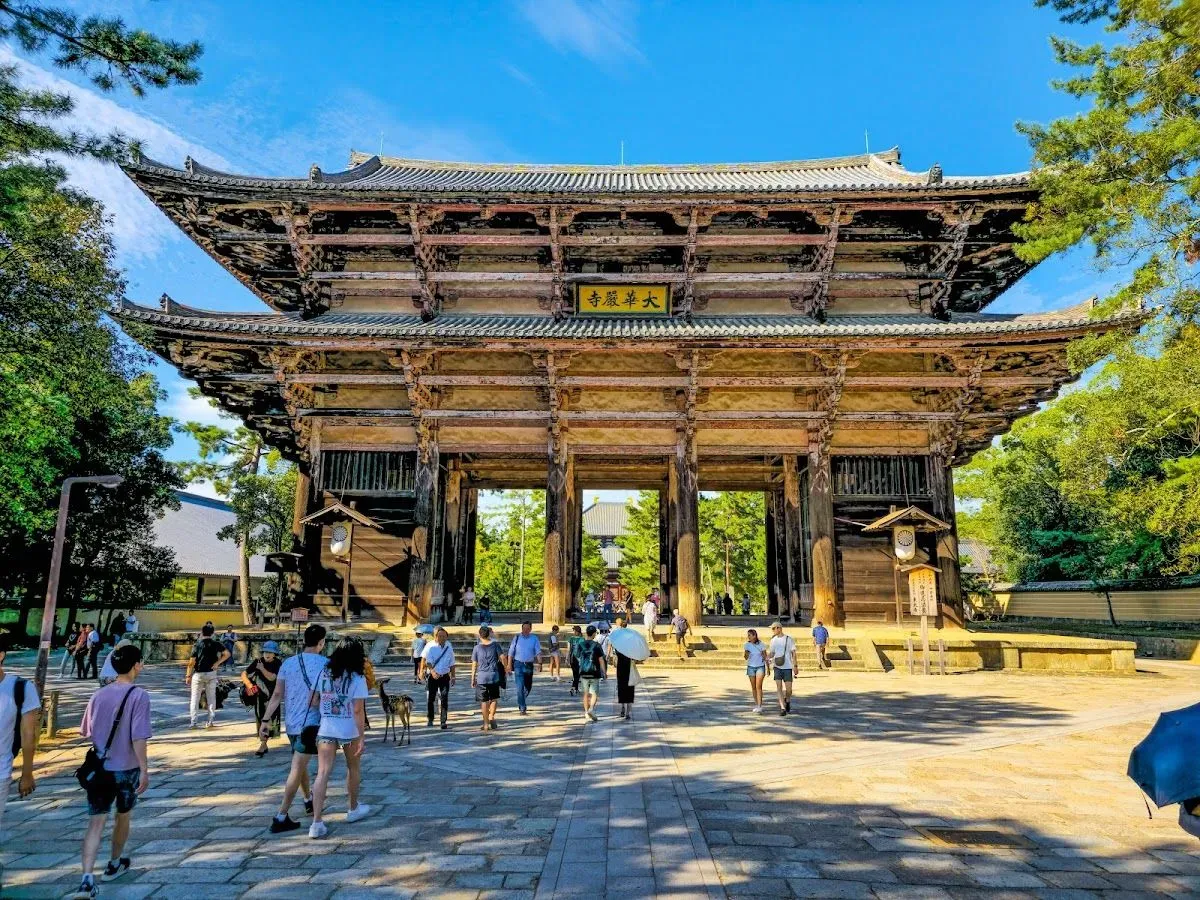
Standing as the monumental entrance to Todai-ji Temple, Nandaimon Gate is a National Treasure of Japan and a masterpiece of medieval wooden architecture. Completed in 1203, this massive double-tiered gate is famous for housing two soaring, 8-meter-tall Nio Guardian statues carved by the legendary sculptor Unkei. Visitors can expect to walk under its towering pillars alongside Nara's famous free-roaming deer while marveling at the sheer scale and raw, unpainted beauty of the timber structure.
What Japanese guides note
Nandaimon serves as the main ceremonial entrance on the path to the Daibutsuden, where crowds and tour groups peak between mid-morning and mid-afternoon. Because the gate stands on open precinct grounds and requires no admission ticket, visiting before 8:30 or after 17:30 allows uninterrupted inspection of the timber structure and guardian statues. Deer gather heavily beneath and around the gate, making it important to keep tickets and maps packed away. Bicycles and personal vehicles may not enter the approach; cyclists must dismount and park in the designated lot southwest of the gate.
Details from local sources
- The two Nio statues face inward across the central walkway rather than southward toward the exterior, and their positions are inverted compared to standard temple gates by placing the open-mouthed Agyo on the west and the closed-mouthed Ungyo on the east. [source]
- During the 1988 to 1993 dismantling and repair work, documents and ink inscriptions found inside the statues revealed that master sculptors Jokei and Tankei also led the project alongside Unkei and Kaikei, completing both figures simultaneously in 69 days using timber transported from Yamaguchi Prefecture. [source]
- On the northern rear side of the gate sit a pair of Important Cultural Property stone guardian lions carved in 1196 from continental stone by stonemasons from China's Song dynasty, originally positioned at the Daibutsuden Chumon before being moved to Nandaimon around 1430. [source]
- The gate has no lower ceiling, leaving the underside of the roof framework exposed, supported by 18 round pillars that rise 19.058 meters high. [source]
Insider Tip
Peer closely through the protective mesh of the two outer alcoves to see the incredibly detailed, muscular details of the Nio statues.
Frequently asked
Can visitors cycle through Nandaimon Gate?
No. Todai-ji regulations forbid riding bicycles or motorbikes along the approach through Nandaimon Gate to prevent collisions with pedestrians and free-roaming deer. Riders must dismount and push bicycles when crossing the path, or leave them at the designated bicycle parking area situated southwest of the gate.
Why do the Nio guardian statues face inward instead of outward?
Unlike most Japanese temple gates where Nio statues face southward toward approaching visitors, Nandaimon's guardians face inward directly toward each other across the central path. This orientation shields the figures from exposure to rain and wind, while preserving the Daibutsuyo building layout introduced during the Kamakura-period rebuilding.
Is an admission ticket required to pass through Nandaimon Gate?
No. Nandaimon Gate stands along the unenclosed public walkway linking Nara Park and the Todai-ji grounds. Passing underneath the gate and viewing both the Nio statues and the rear stone lions is entirely free. Admission fees apply only upon entering inner enclosures such as the Daibutsuden or Todai-ji Museum.
Can visitors see Nandaimon Gate at night?
Yes. Because the gate is not gated off within an enclosure, visitors can walk up to it at night. Under Nara's year-round Light-Up Promenade initiative, Nandaimon and its Nio statues are illuminated after sunset, making the carving details visible through the wire mesh without daytime glare.
Our Nara walking tours

Photos