
The days of the Japan Rail Pass being a mandatory, brainless purchase for every tourist are officially over. Since the massive price hikes, buying a nationwide pass without doing the math is the easiest way to flush thousands of yen down the drain. This guide will show you exactly how to calculate your train fares and when to skip the pass entirely.
Is the Japan Rail Pass still worth it for a standard vacation?
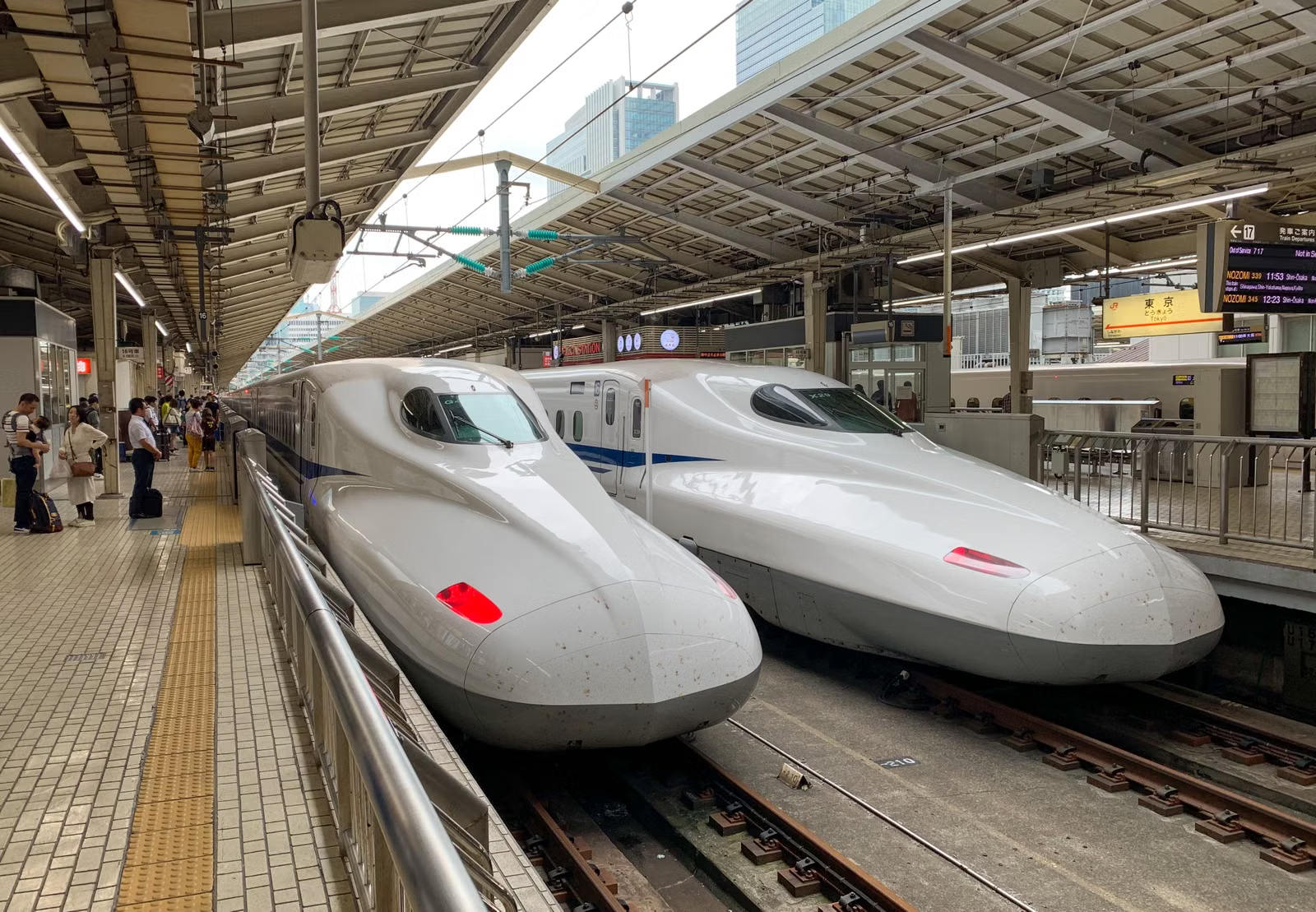
No, the nationwide Japan Rail Pass is dead weight for 90% of travelers on a standard Tokyo-Kyoto-Osaka itinerary [1.2.2]. Ever since the massive price hikes, a 7-day Ordinary pass sets you back ¥50,000. Meanwhile, individual Shinkansen round-trip tickets between Tokyo and Kyoto cost roughly ¥29,000, leaving a massive ¥21,000 hole in your pocket if you buy the pass. Unless you plan to rocket across multiple regions in a single week, skip it.
Instead of wasting your budget on unused train tracks, invest in experiences. You can easily book our Tokyo City Highlights - Shibuya + Harajuku + Asakusa tour to hit the ground running with an insider, then buy single train tickets as you go.
How much does the JR Pass cost in 2026?
As of 2026, the official online price for a 7-day nationwide Ordinary JR Pass is ¥50,000, with the 14-day pass at ¥80,000 and the 21-day pass at ¥100,000. For the premium Green Car carriages, expect to pay ¥70,000 for 7 days, ¥110,000 for 14 days, and ¥140,000 for 21 days. Keep in mind that overseas travel agencies will raise their prices starting October 1, 2026 (pushing a 7-day Ordinary pass to ¥53,000), so buying directly from the official JR online portal is the smartest move to secure standard pricing.
When does the nationwide JR Pass actually make financial sense?
The nationwide JR Pass only makes financial sense if your itinerary involves rapid, long-distance travel spanning multiple regions within a tight consecutive window. To break even on a 7-day pass (¥50,000), you must complete a heavy route like Tokyo to Kyoto, Kyoto to Hiroshima, and Hiroshima back to Tokyo inside seven days. If you are staying in Osaka or Kyoto for a few days and taking slow, local day trips, buying individual Shinkansen tickets is significantly more economical.
For example, you can buy a one-way ticket to Osaka, dive into our private Osaka Castle, Dotonbori & Hidden Osaka – Private 3h Tour, and use a local IC card like Suica or ICOCA for cheap regional travel.
What are the best JR Pass alternatives for budget travelers?
The best alternatives to the nationwide JR Pass are regional JR passes, domestic low-cost flights, and individual booking platforms like SmartEX. Regional passes, such as the JR West Kansai-Hiroshima Area Pass or the Hokuriku Arch Pass, did not suffer the same extreme price hikes and still offer phenomenal value for exploring specific areas. For long-distance jumps—such as Tokyo to Sapporo or Fukuoka—domestic LCC flights (like Peach or Jetstar) are often half the price of a Shinkansen ticket and take a fraction of the travel time.
How do you calculate your train ticket prices before booking?
You can easily calculate your exact train route prices using online tools like Japan-Guide's JR Pass Calculator, or navigation apps like Navitime and Jorudan. Simply plug in your planned destinations, and these platforms will display the total cost of individual tickets, including seat reservations. Compare this total to the ¥50,000 (7-day), ¥80,000 (14-day), or ¥100,000 (21-day) price tag of the JR Pass to see instantly if you are saving money or overpaying.
Explore Japan with Wabisabi
Skip the logistics headaches and dive straight into the culture. Let our local guides lead the way in Tokyo, Kyoto, and Osaka.
Book this tour →