Arashiyama Monkey Park Iwatayama
Good to know before you go
- Getting there
- Arashiyama Station · 7 min walk (Hankyu Arashiyama Line)
- Hours
- 9:00–16:00 (summit closes at 16:30; closes early if monkeys return to the mountain; closed Jan 1 and in severe weather)
- Admission
- ¥800 (adults 16+), ¥400 (children 4–15), free for children 3 and under (cash only)
- Time needed
- 60–90 min
- Best time to go
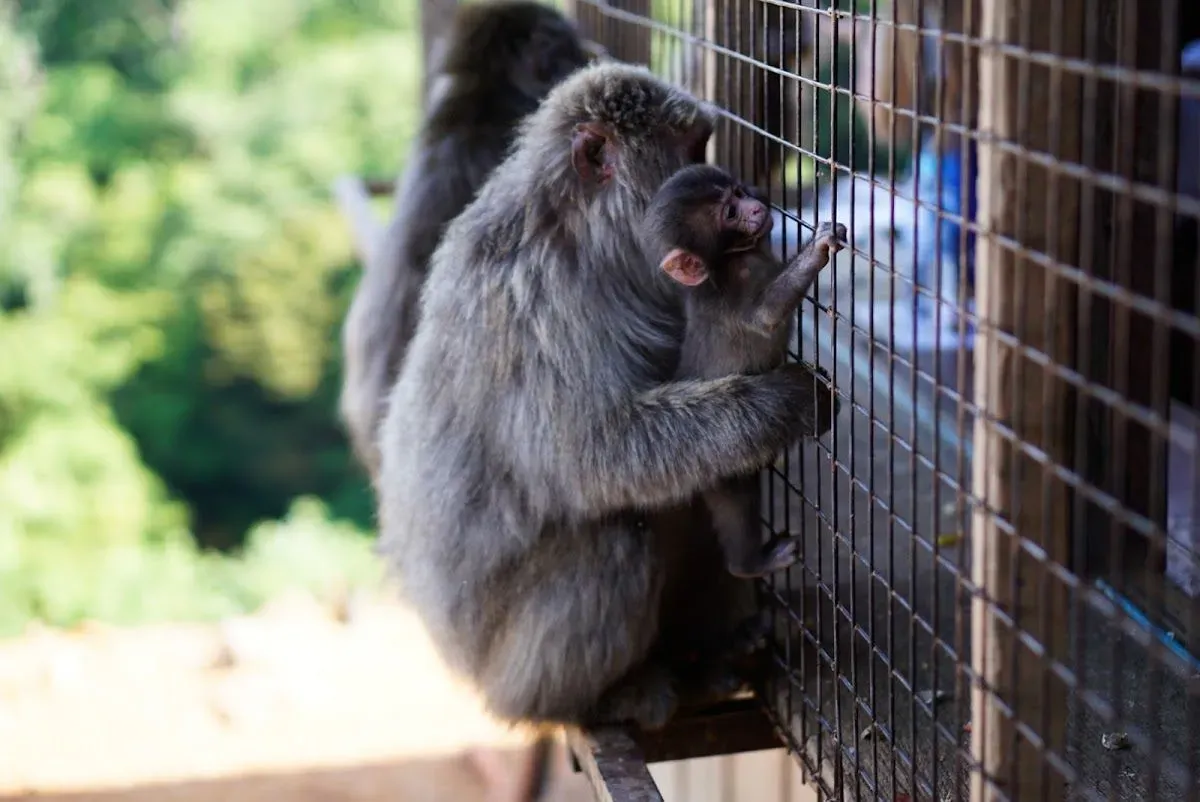
- Morning around 9:00–10:30, or spring (April–May) during the birthing season when newborn macaques can be seen clinging to their mothers.
Hours can change on holidays — check the official site before travelling.
About
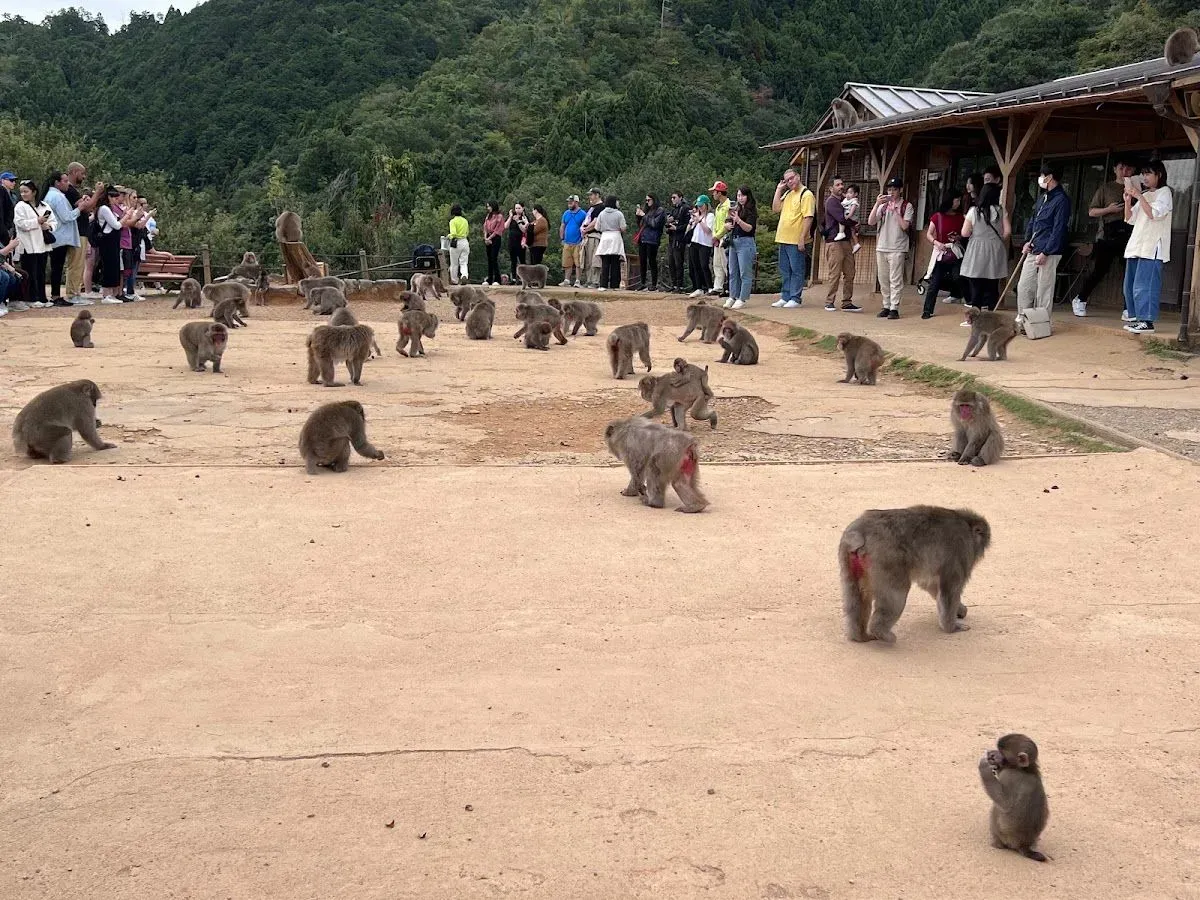
Located atop Mt. Arashiyama, this park offers the unique chance to observe over a hundred wild Japanese macaques roaming freely in their natural habitat. After a steep 20-minute hike, you are rewarded with both playful wildlife encounters and stunning, panoramic views over Kyoto. Visitors can even feed the monkeys apple slices from inside a safe, enclosed viewing hut.
What Japanese guides note
Reaching the summit feeding plateau requires navigating an initial 120-step stone stairway followed by a continuous 20-minute uphill dirt trail, making practical footwear essential. The ticket gate is set within the grounds of Ichitani Munakata Shrine on the south bank of the Katsura River, an orientation point travelers frequently miss when searching for a standard zoo entrance. While the wild troop wanders unrestrained around the summit viewpoint, feeding is legally and strictly confined to the interior of the enclosed observation hut using park-sold apples and peanuts.
Details from local sources
- The entrance gate is located inside the grounds of Ichitani Munakata Shrine, 20 meters upstream along the river from the southern end of Togetsukyo Bridge. [source]
- Admission tickets become invalid unless used to enter the trail within 30 minutes of purchase. [source]
- Visitors feeding the monkeys inside the summit rest house must place the food onto the feeding shelf rather than handing it to them directly. [source]
- Visitors are required to keep at least two meters away from the macaques and must refrain from crouching down directly in front of them when taking photographs. [source]
- Every individual among the park's roughly 120 macaques is cataloged by primate researchers with documented parentage and birth dates spanning over 60 years. [source]
Insider Tip
Wear sturdy walking shoes for the steep dirt trail up, and avoid making direct eye contact with the monkeys to keep them relaxed.
Frequently asked
Can I pay for admission using a credit card or transit IC card?
No, admission payment is strictly cash only in Japanese yen. The ticket counter does not accept credit cards, digital wallets, transit IC cards, or foreign currency. Because no ATMs exist within the shrine approach, visitors should carry sufficient physical cash before crossing Togetsukyo Bridge to buy tickets.
Does the monkey park ever close earlier than regular scheduled hours?
Yes. Although ticketing operates until 16:00 with the summit clearing by 16:30, the facility manages free-ranging wild animals. If the troop decides to retreat back into the mountain forest early, staff close the grounds ahead of schedule. Operations also suspend during heavy rain, snowfall, or typhoons.
Can I bring my dog or pet inside a carrier or backpack?
No, pets of any kind are strictly forbidden from entering the park grounds. Staff do not permit animals even if enclosed in backpacks, travel bags, or pet carrier crates. This rule prevents acute stress to the resident wild troop and eliminates potential territorial aggression against domestic animals.
What should I do if a macaque makes eye contact?
Avert your gaze immediately and quietly step backward without making sudden movements. Among Japanese macaques, sustained direct eye contact is interpreted as a direct hostile threat and can trigger intimidation behavior. Visitors should also refrain from leaning over them or kneeling closely for close-up photos.
Our Kyoto walking tours


Photos