Sannenzaka
Good to know before you go
- Getting there
- Kiyomizu-Gojō Station · 20 min walk (Keihan Main Line)
- Hours
- Open 24 hours
- Admission
- Free
- Time needed
- 20–40 min
- Best time to go
- Early morning before 08:30 or after 18:00, when retail foot traffic drops and the stone staircases are fully unobstructed.
Hours can change on holidays — check the official site before travelling.
About
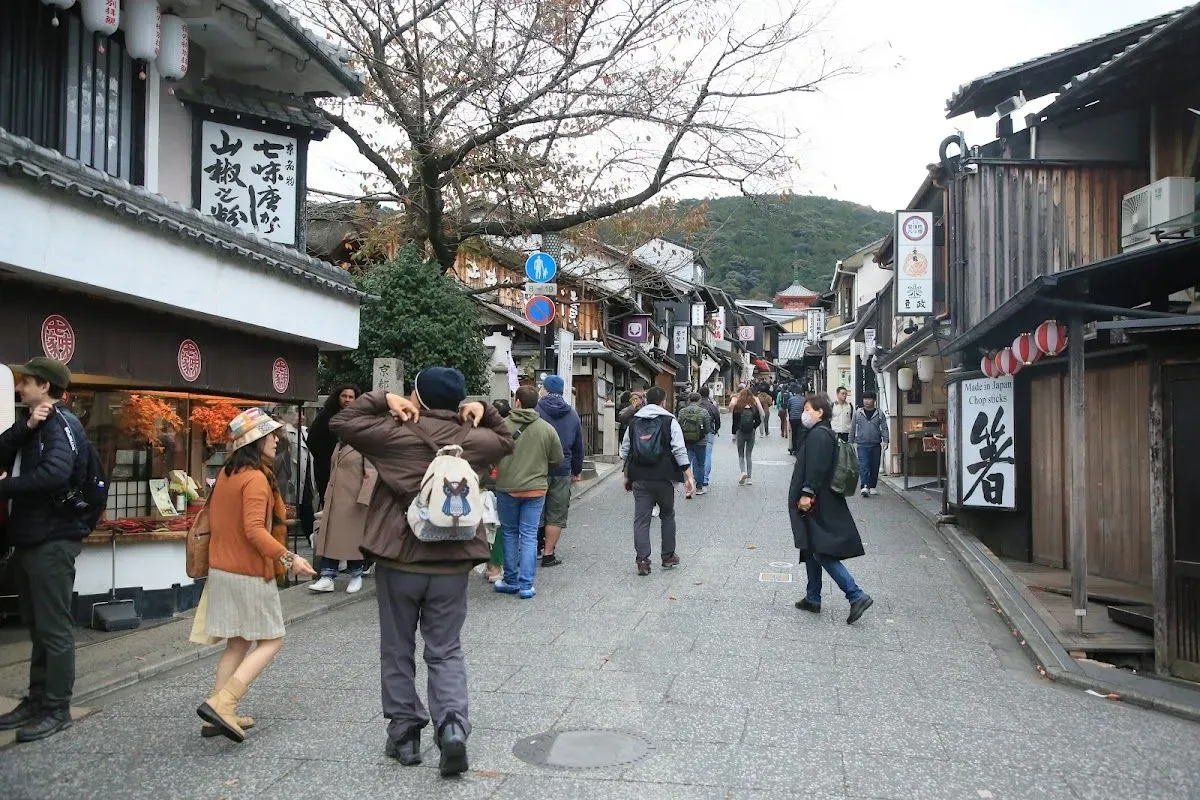
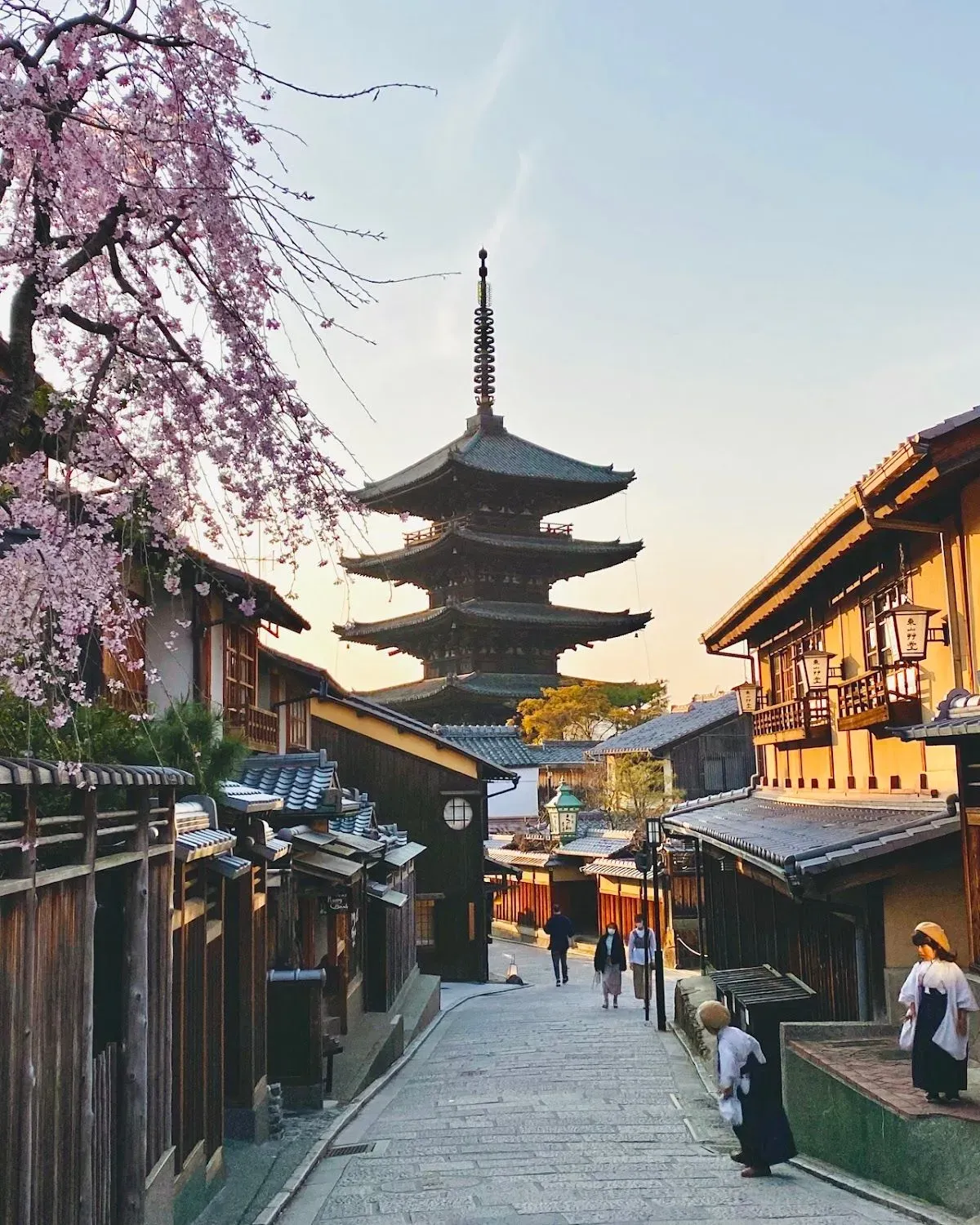
Sannenzaka is a beautifully preserved, stone-paved pedestrian slope in Kyoto's historic Higashiyama district. Lined with traditional wooden machiya houses, tea shops, and local craft boutiques, it offers the quintessential postcard-perfect view of old Japan. Visitors can expect a charming but steep walk filled with the aromas of incense and matcha, though it does get highly congested during peak hours.
What Japanese guides note
Sannenzaka functions as a pedestrian thoroughfare connecting Kiyomizu-dera to Ninenzaka, Kodai-ji, and Yasaka Shrine within a legally protected architectural zone. The stone staircases become slick during rain and winter freezes, making careful footing essential. Local merchant guidelines request that visitors avoid eating while walking to prevent litter along the designated preservation corridor.
Details from local sources
- The granite flagstones paving Sannenzaka and adjacent historic alleys were repurposed from the tracks of Kyoto's municipal tramway network following the closure of the city streetcars in the 1970s. [source]
- In 1976, Sannenzaka was selected as one of Japan's earliest Important Preservation Districts for Groups of Traditional Buildings, initially covering 5.3 hectares before expanding to 8.2 hectares in 1996. [source]
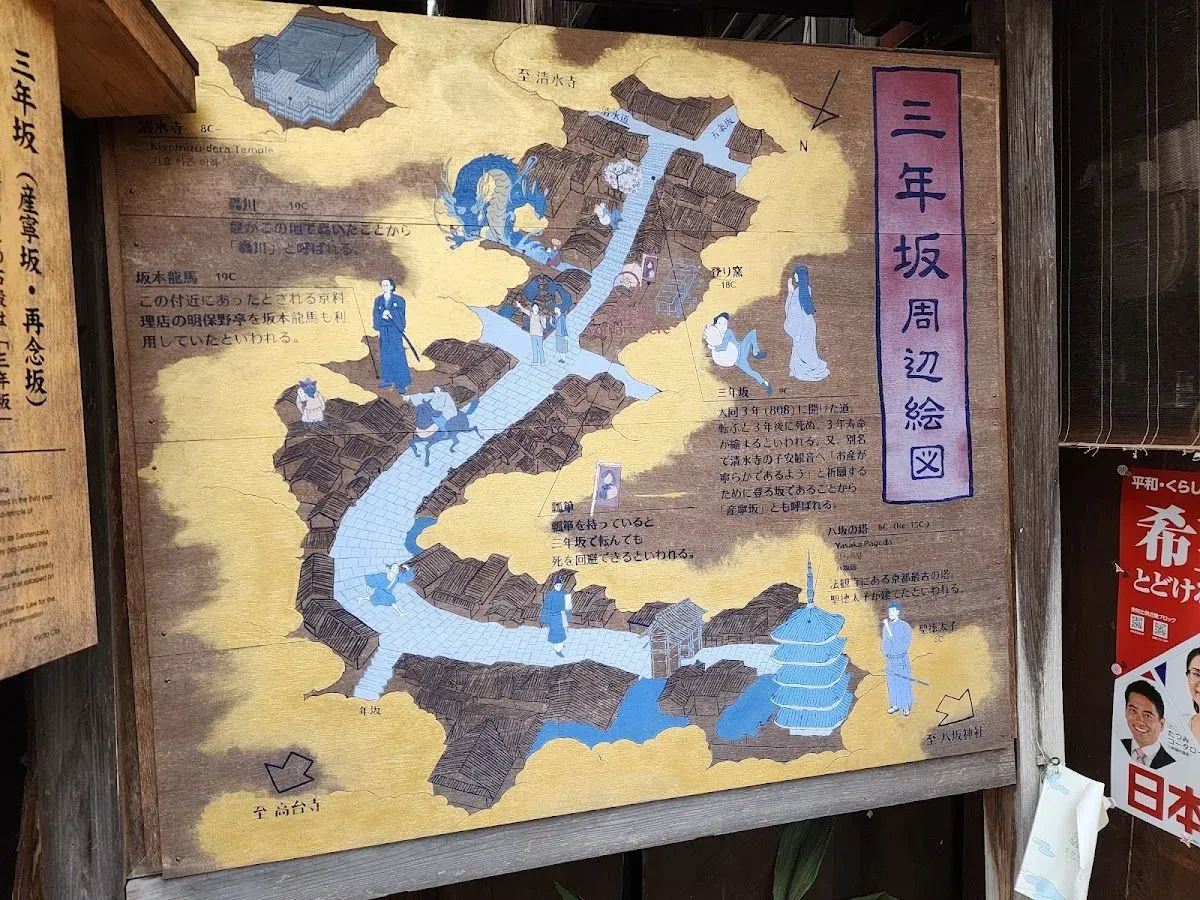
- A long-standing superstition asserts that stumbling on the slope shortens life by three years, which historically prompted travelers to carry dried gourds believed to capture any escaping soul. [source]
- During Japan's medieval era, the primary pilgrimage route ascending to Kiyomizu-dera ran past the Yasaka Pagoda and up Sannenzaka before turning east at Kyokakudo. [source]
- The slope's Akebonotei ryokan was the site of the July 1864 Akebonotei Incident, an armed raid by the Shinsengumi targeting anti-shogunate conspirators shortly after the Ikedaya Affair. [source]
Insider Tip
Visit at sunrise to photograph the empty, lantern-lit streets before the crowds and shops open around 9:00 AM.
Frequently asked
Why is Sannenzaka also referred to as Sanneizaka?
The name stems from "sannei" (safe childbirth), reflecting its role as the pilgrimage path to Kiyomizu-dera's Koyasu Kannon, where worshippers pray for easy delivery. A secondary tradition claims the stone steps were first completed in 808 CE during the third year of Japan's Daido era.
Why are gourds associated with Sannenzaka?
Folklore warns that falling on the slope reduces one's life by three years or brings fatal misfortune. Historically, pilgrims carried hollow gourds (hyotan) as protective talismans believed to capture any soul dislodged by a fall, leading merchants along the slope to sell decorative gourds.
Are the stone pavers on Sannenzaka centuries old?
No. While the thoroughfare itself dates back over a millennium, the current granite flagstones lining Sannenzaka, Ninenzaka, and the Philosopher's Path were salvaged from decommissioned municipal tramway tracks and re-laid here following the phase-out of the Kyoto City Tram in the 1970s.
Our Kyoto walking tours


On the same walk
Photos