Kema Sakuranomiya Park
Good to know before you go
- Getting there
- Sakuranomiya Station · 3 min walk (JR Osaka Loop Line)
- Hours
- Open 24 hours (facility hours vary)
- Admission
- Free
- Time needed
- 1–2 hours
- Best time to go
- Late March to early April for peak sakura, or the evening of July 25 during the Tenjin Matsuri boat procession.
Hours can change on holidays — check the official site before travelling.
About
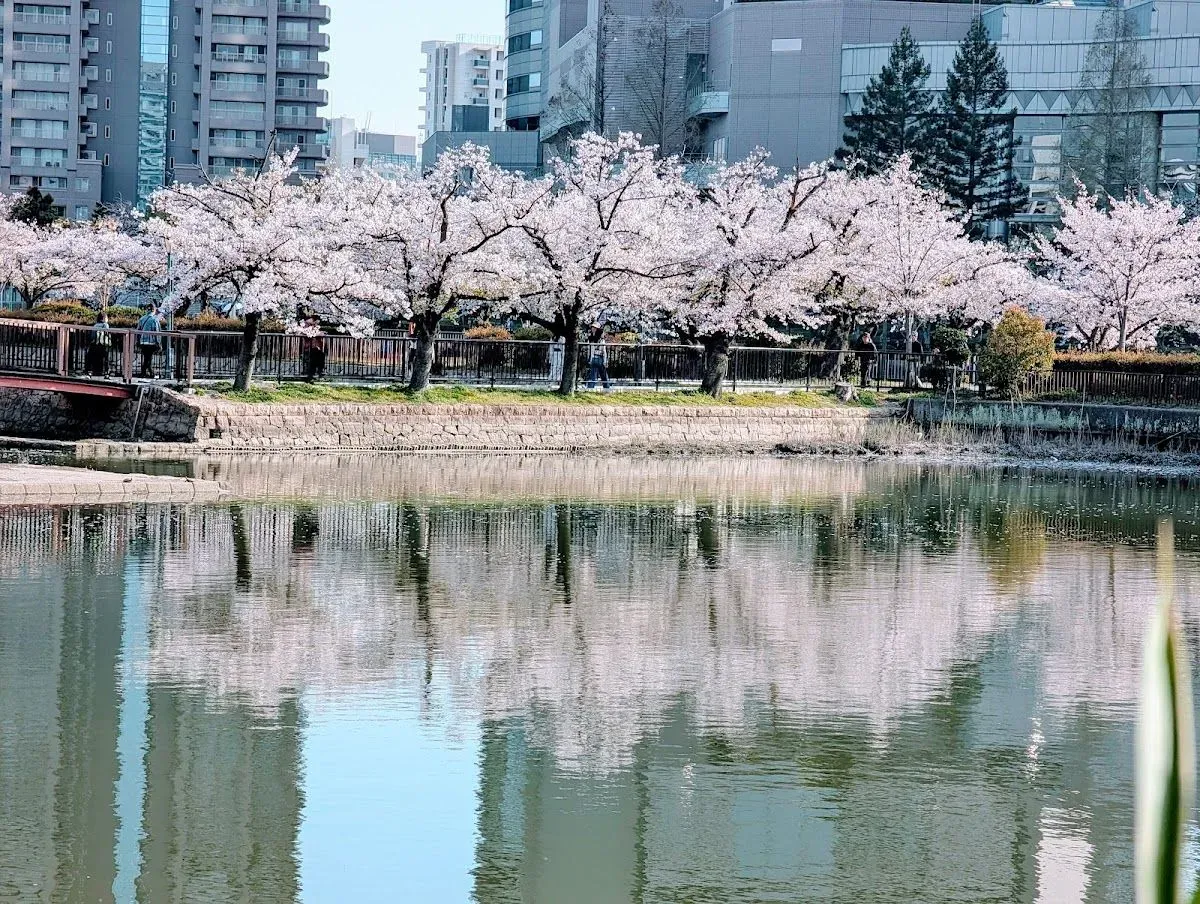
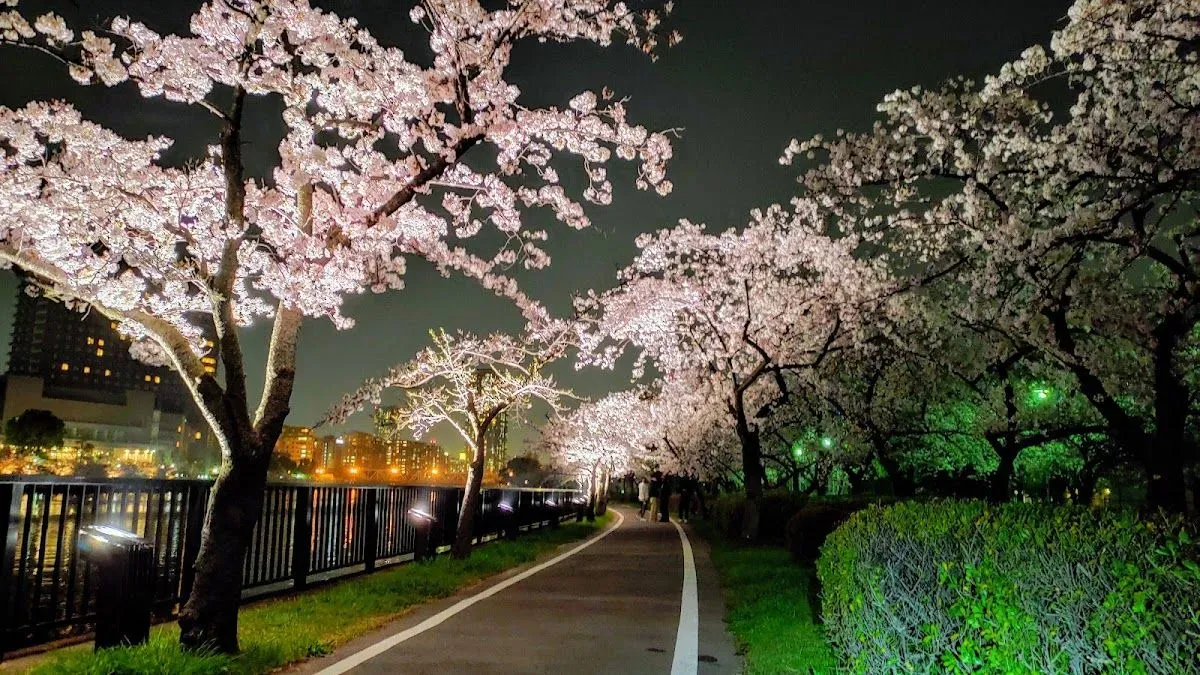
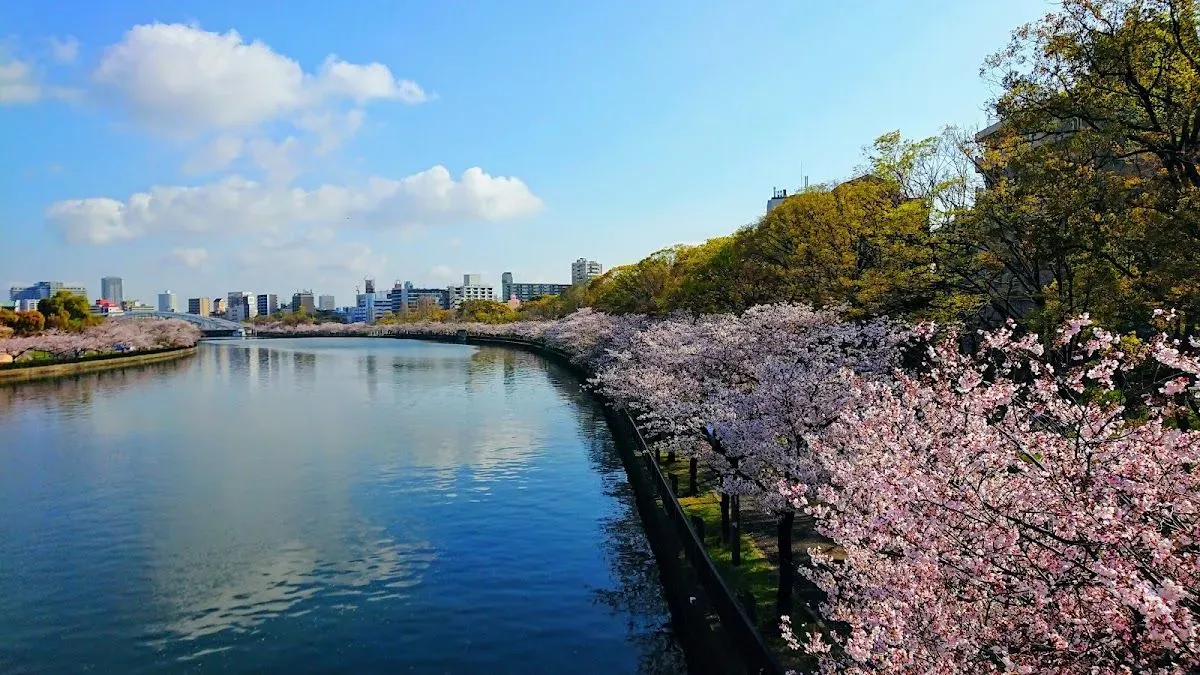
Stretching nearly four kilometers along the Okawa River, this riverside park is one of Osaka's premier cherry blossom destinations, boasting nearly 4,800 sakura trees. Beyond the spring bloom, it offers a scenic escape with views of Osaka Castle, historic buildings like the Mint Museum, and walking paths. It is perfect for travelers wanting a relaxed stroll or a picnic away from the concrete bustle.
What Japanese guides note
Because the park stretches over four kilometers along both shores of the Okawa River, arrival station determines the walking experience: Sakuranomiya Station accesses the central lawn and urban beach, while Temmabashi Station connects to the Mint Museum and Osaka Castle corridor. The paved paths function as shared commuter thoroughfares, so pedestrians need to remain mindful of cyclists traveling at high speeds. Leaving unattended picnic tarps to hold spots ahead of time is officially prohibited and monitored by park wardens.
Details from local sources
- Barbecuing and open flames are prohibited throughout the entire park on both the Kita and Miyakojima riverbanks. [source]
- The artificial sand beach named Sakuranomiya Beach was constructed by repurposing an old timber storage basin along the left riverbank. [source]
- The northern section of the park features monuments dedicated to eighteenth-century haiku master Yosa Buson, who was born in adjacent Kema village. [source]
- The grounds preserve a 1965 monument marking the Sakuranomiya Water Source, Osaka's first modern water filtration facility that operated between 1895 and 1915. [source]
Insider Tip
Avoid the massive spring crowds by visiting at sunrise, or view the illuminated nighttime blossoms from a water bus on the Okawa River.
Frequently asked
Can visitors barbecue or set up cooking stoves in the park?
No. Unlike select designated barbecue areas elsewhere in Osaka, open flames and portable grills are completely prohibited across both banks of Kema Sakuranomiya Park. Park patrols monitor the riverside regularly, and leaving picnic blankets unattended in advance to reserve space is also prohibited under city guidelines.
What are the operating hours for Sakuranomiya Beach?
The Sakuranomiya Beach section, known as Osaka Fureai no Mizube, is open to the public daily from 8:00 AM to 6:00 PM for most of the year. During the summer months from June through September, opening hours extend until 8:00 PM. Entry to the sandy riverside area is free.
Is dedicated parking available on-site at Kema Sakuranomiya Park?
No dedicated parking facilities exist for Kema Sakuranomiya Park. Visitors arriving by personal vehicle must rely on paid private coin-parking lots throughout Miyakojima and Kita wards. Osaka City authorities advise arriving by rail via Sakuranomiya, Osakajō-kitazume, or Temmabashi stations to avoid residential congestion.
Our Osaka walking tours


On the same walk
Photos