Shinsaibashi
Good to know before you go
- Getting there
- Shinsaibashi Station · 2 min walk (Osaka Metro Midōsuji Line, Osaka Metro Nagahori Tsurumi-ryokuchi Line)
- Admission
- Free
- Time needed
- 15–30 min
About
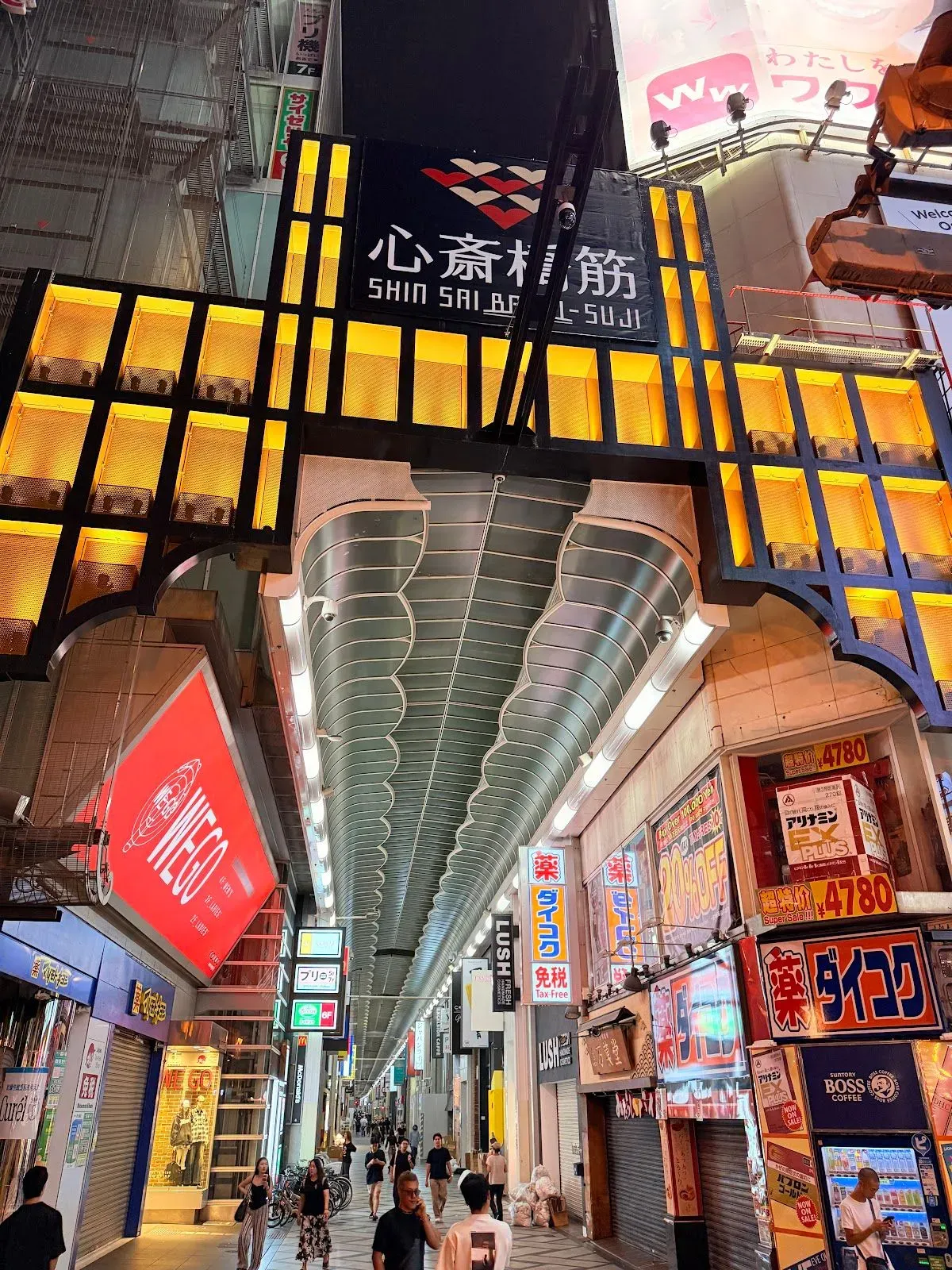
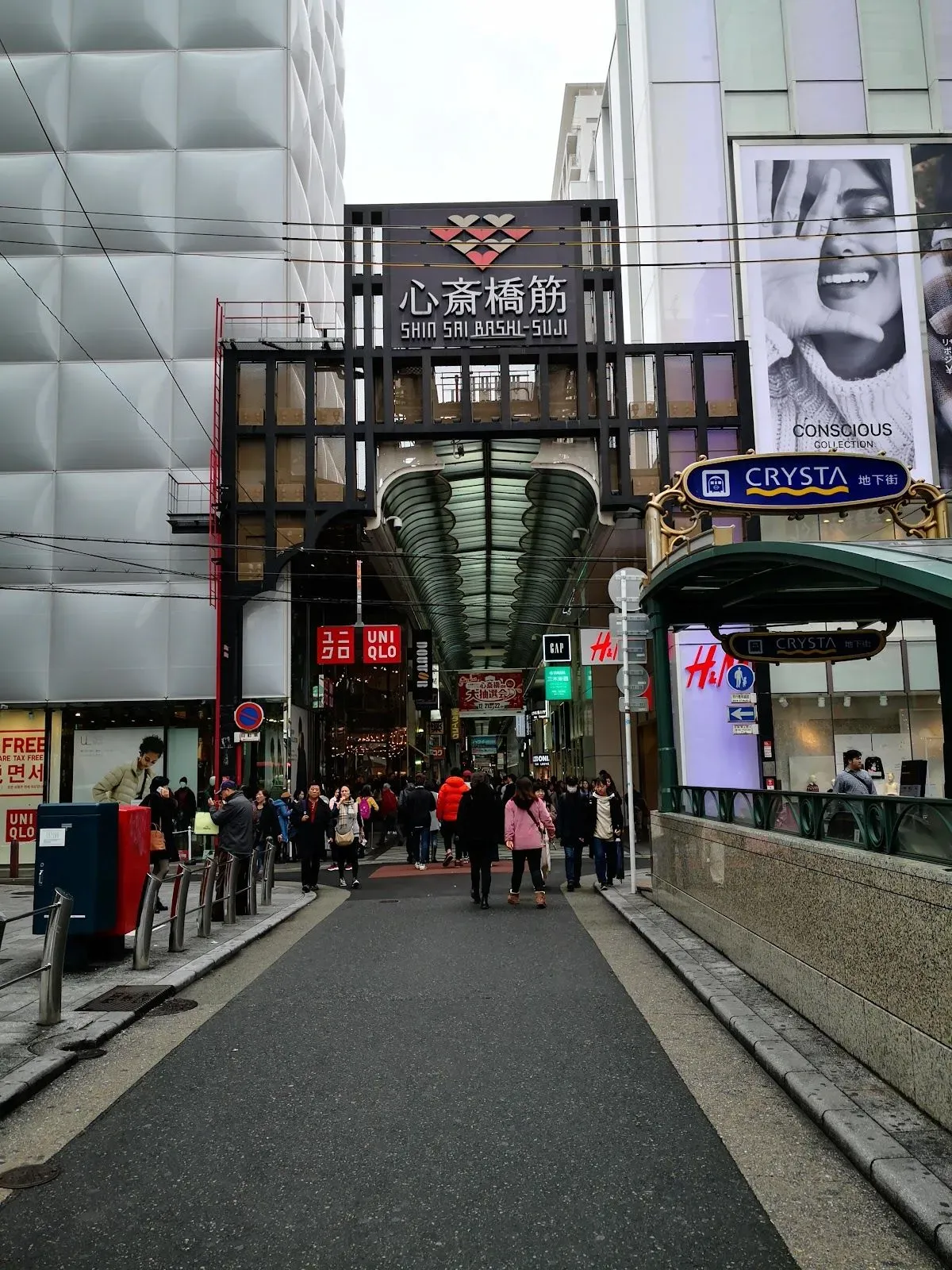
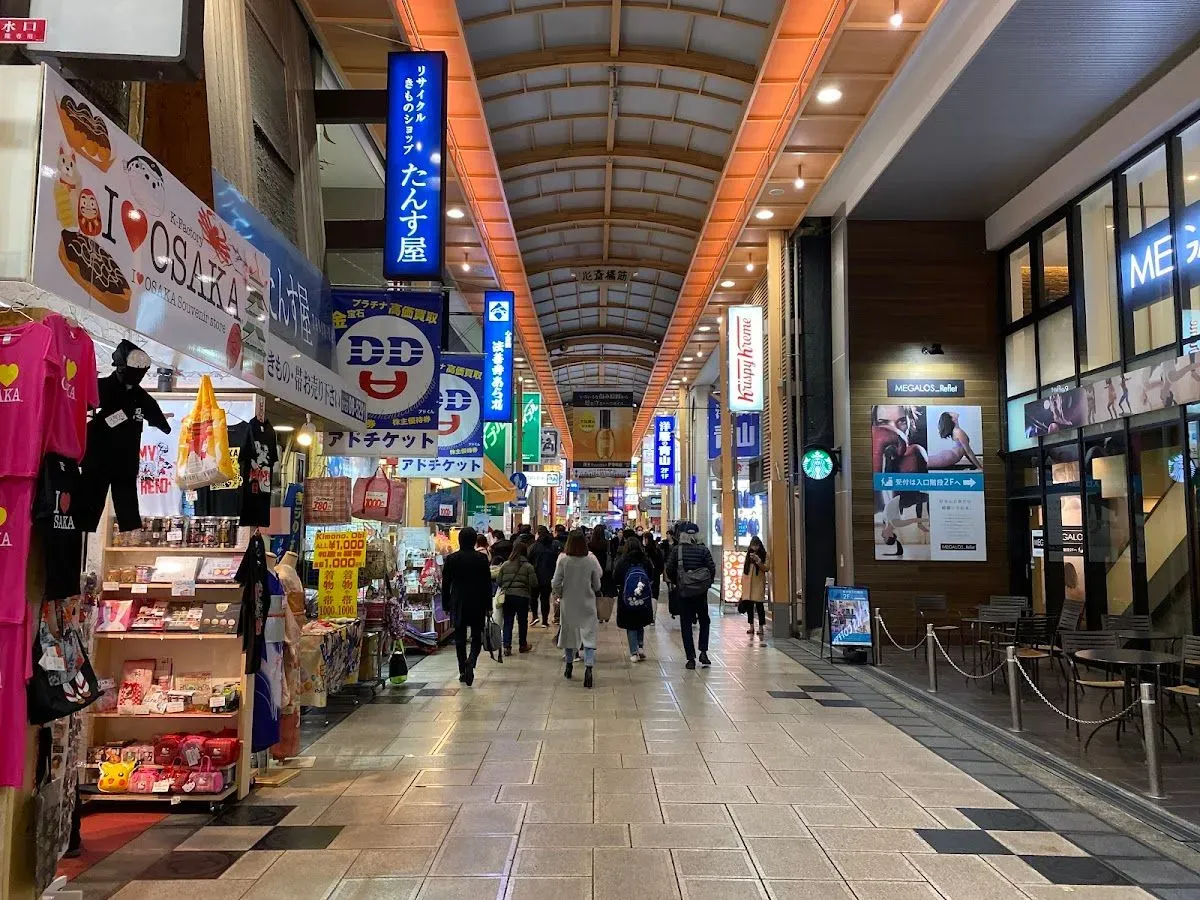
Originally a historic 17th-century bridge crossing the Nagahori Canal, Shinsaibashi has evolved into Osaka's premier shopping and fashion landmark. Today, the paved pedestrian bridge area serves as a scenic gateway to the bustling Shinsaibashi-suji covered arcade. Visitors can expect a vibrant, high-energy atmosphere where historic stone architecture meets modern flagship boutiques, trendy cafes, and traditional Osaka street food stalls.
What Japanese guides note
Pedestrians passing between Minamisenba 3-chome and the Shinsaibashi-suji covered arcade traverse Nagahori-dori at the exact historical site of the bridge, where original 1909 stonework and restored gas lamps line the street-level median. Stairwells and elevators in the immediate vicinity lead down into Crysta Nagahori, an expansive underground concourse that connects Shinsaibashi, Yotsubashi, and Nagahoribashi stations. Surface sidewalks along Nagahori-dori are designated strictly as bicycle-parking ban zones, and any unattended bicycles are swiftly impounded by the city.
Details from local sources
- Constructed around 1622 as a wooden bridge spanning 18 ken (35.5 meters) by 2 ken 1 shaku (4.2 meters), Shinsaibashi was maintained and funded by local merchants as a citizen-managed machibashi rather than a shogunate-managed public bridge. [source]
- The 1873 imported German bowstring truss iron bridge that crossed without piers was later relocated and remains preserved today as Ryokuchi Nishi Bridge in Osaka's Tsurumi Ryokuchi Park. [source]
- In 1909, Shinsaibashi was rebuilt as Osaka's first two-span stone arch bridge using granite from Ehime Prefecture and earned the nickname Meganebashi because the illuminated arches reflected spectacle-like rings on the canal. [source]
- The ground-level pedestrian median across Nagahori-dori incorporates the original 1909 granite balustrades and newel posts alongside reconstructed gas lamps and an eastward memorial monument. [source]
- Following the infill of Nagahori Canal, Shinsaibashi was reassembled on November 23, 1964 as an elevated pedestrian overpass across the avenue and was used as a filming location in the 1989 film Black Rain before its 1997 street-level reconfiguration. [source]
Insider Tip
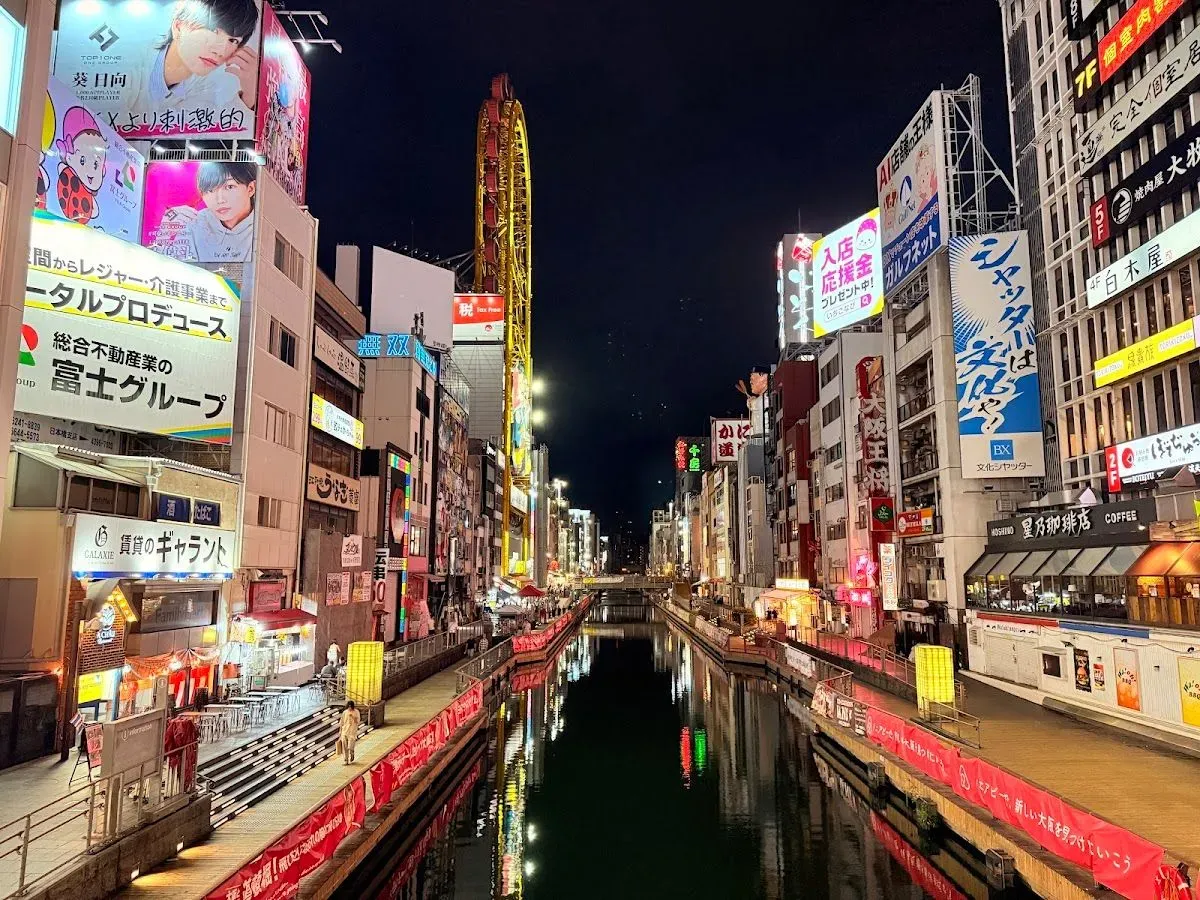
Avoid the massive midday crowds by visiting in the early morning for photos of the bridge architecture, or after 9 PM for a neon-lit stroll.
Frequently asked
Why is there no water or river underneath Shinsaibashi?
The Nagahori Canal was filled in during reclamation work between 1960 and 1964 to construct the Nagahori-dori roadway and underground infrastructure. In 1997, the Crysta Nagahori shopping center opened below street level, and the historic 1909 stone balustrades were reset directly onto the pedestrian street crossing above.
Where does the name Shinsaibashi come from?
The bridge and district take their name from merchant Minoya Okada Shinsai, one of four figures who oversaw the excavation of the Nagahori Canal in 1622. Shinsai constructed the original wooden bridge across the new canal to facilitate travel between merchant residences on either bank.
Where can the 1873 iron Shinsaibashi bridge be seen today?
When Shinsaibashi was rebuilt as a stone arch bridge in 1909, the 1873 German bowstring truss was dismantled and preserved. The historic iron superstructure was relocated to Tsurumi Ward, where it now serves as the outer railing framework of Ryokuchi Nishi Bridge in Tsurumi Ryokuchi Park.
Our Osaka walking tours


On the same walk
Photos