Otemachi Forest
Good to know before you go
- Getting there
- Otemachi Station (Tokyo Metro Tozai Line, Tokyo Metro Marunouchi Line, Tokyo Metro Chiyoda Line)
- Hours
- Open 24 hours (adjacent pathways are permanently open)
- Admission
- Free
- Time needed
- 15–30 min
- Best time to go
- Midday in summer or early spring mornings; the canopy creates a cool spot reducing ambient temperatures by up to 3°C compared to surrounding streets, while spring brings blooming forest-floor ephemerals.
Hours can change on holidays — check the official site before travelling.
About
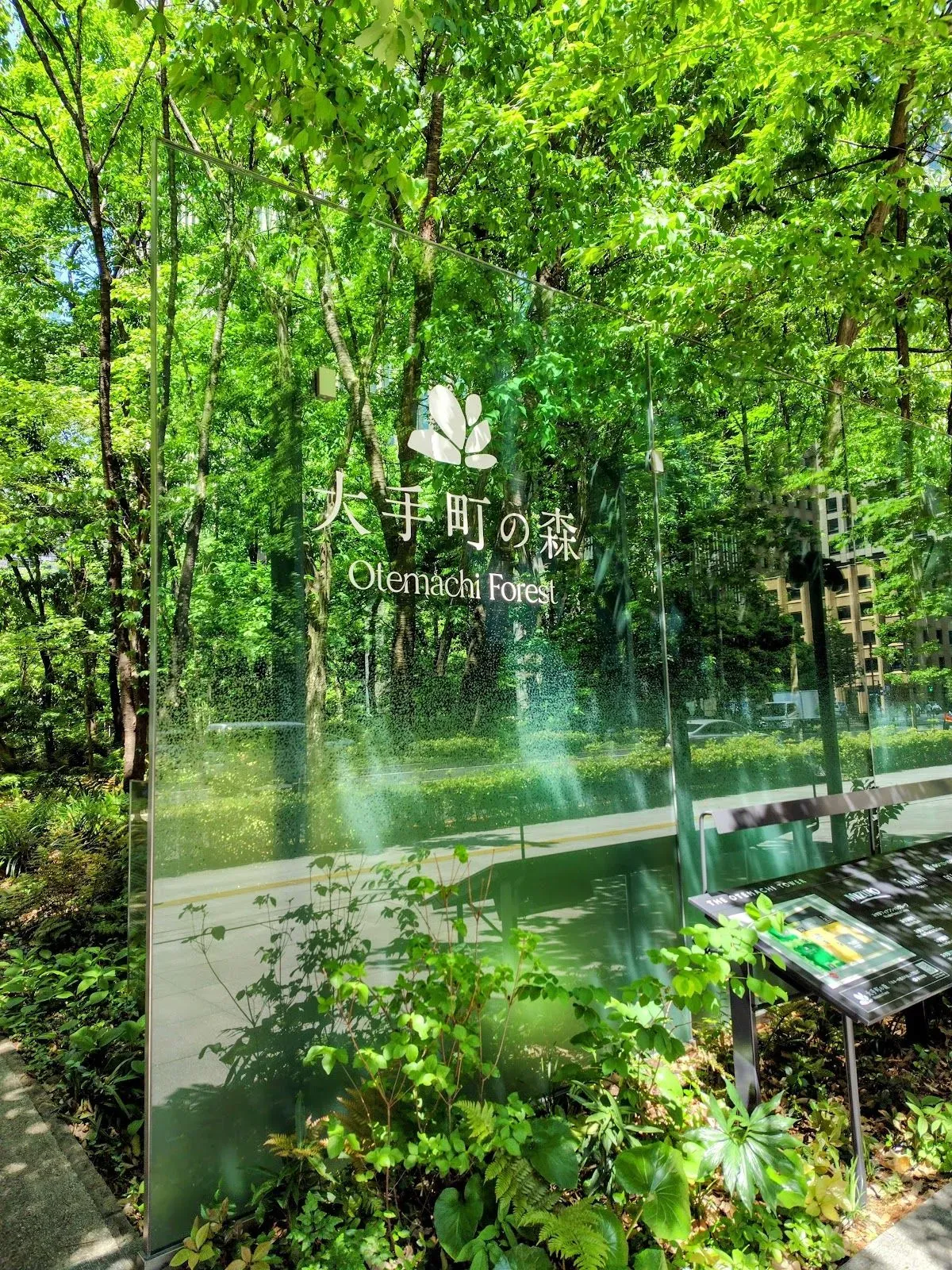
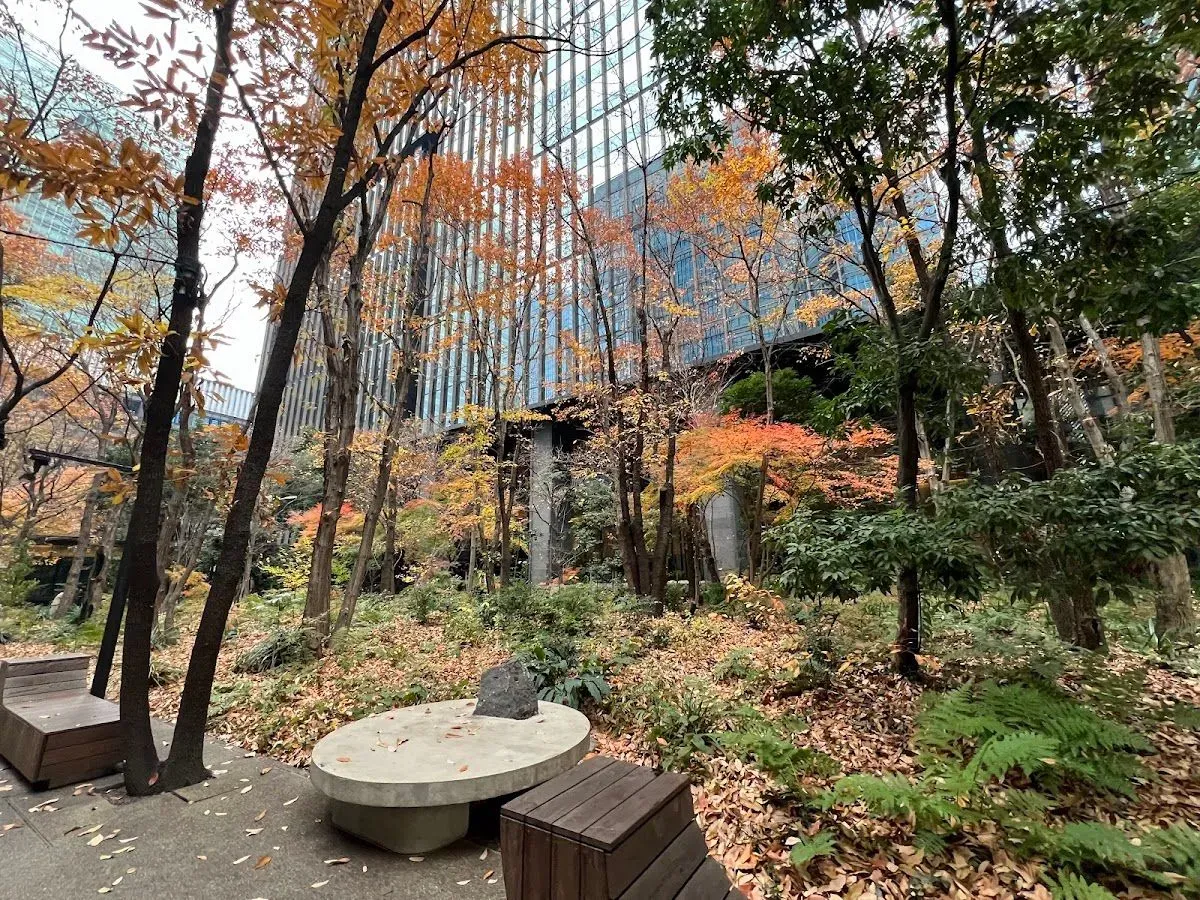
Otemachi Forest is a meticulously engineered, 3,600-square-meter natural woodland oasis nestled directly at the base of the Otemachi Tower in Tokyo's financial hub. Created by transplanting a fully formed forest ecosystem, it offers a refreshing contrast of dense foliage, birdlife, and streamways set against towering skyscrapers. It is a perfect, peaceful spot to experience how modern Japanese urban design harmoniously integrates nature into the concrete jungle.
What Japanese guides note
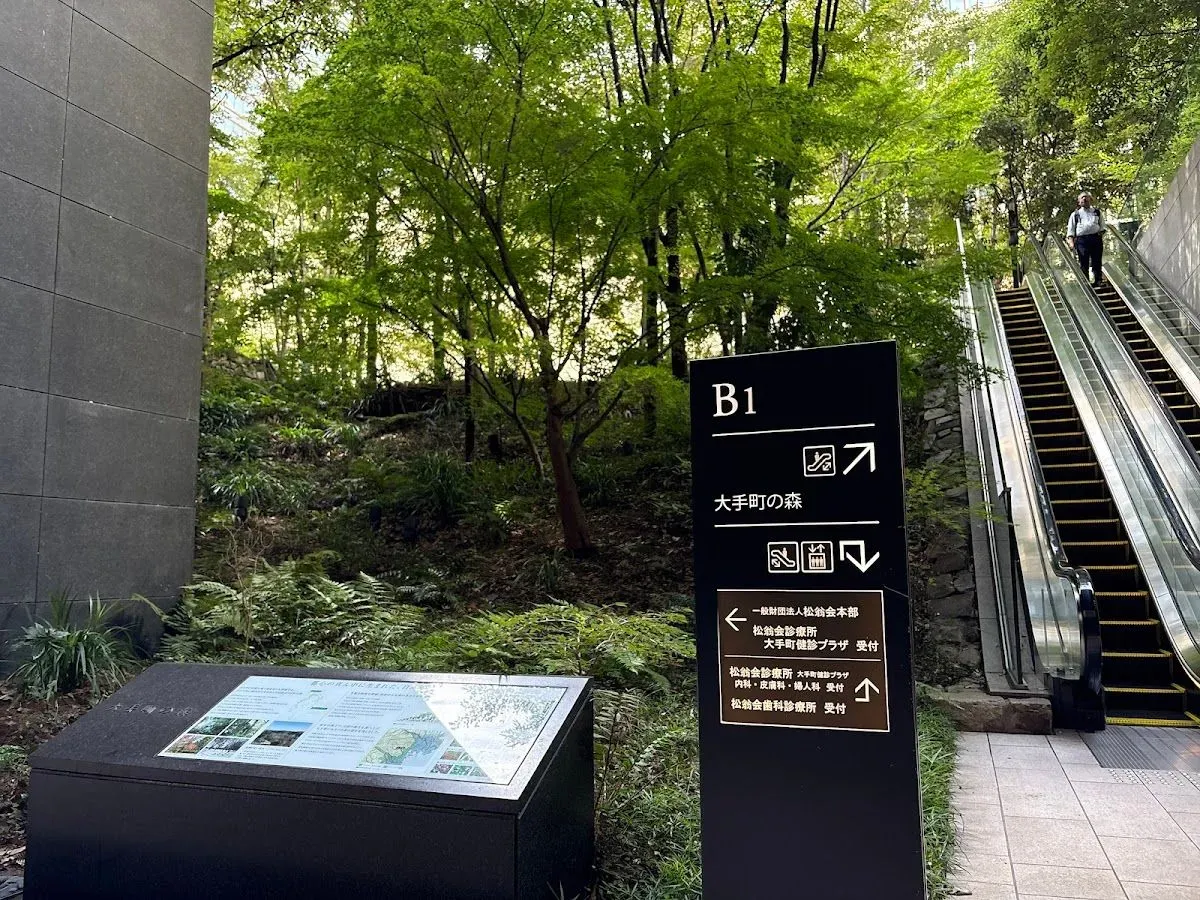
The forest walkways and public seating remain open around the clock, but visitors must remain on paved stone promenades and timber rest decks rather than treading into the understory. Located at the northern terminus of the pedestrianized Marunouchi Naka-dori, it serves as a natural endpoint for a walking route up from Tokyo Station. Direct escalators connect the forest down to the OOTEMORI retail plaza and Otemachi Station's concourses.
Details from local sources
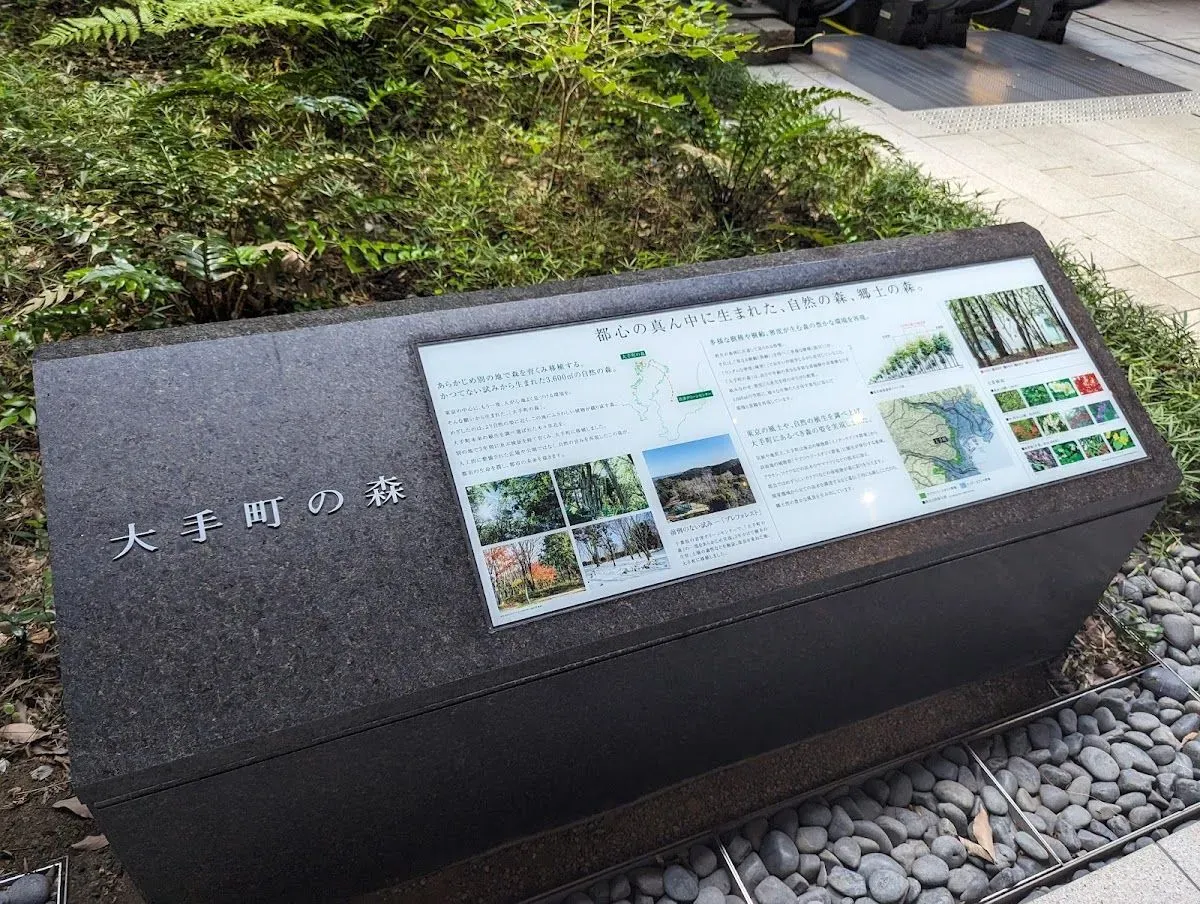
- Before planting in Tokyo, developers grew and tested an identical 1,300-square-meter forest plot in Kimitsu, Chiba Prefecture for three years using a trial method known as Pre-Forest. [source]
- The tree canopy and permeable ground create an urban cool spot that reduces average on-site temperatures by 1.7 degrees Celsius and adjacent sidewalk temperatures by 0.3 degrees Celsius. [source]
- The landscape retains an estimated 275 cubic meters of rainwater in its artificial soil layers alongside an underground cistern holding 760 cubic meters of storm runoff recycled for irrigation. [source]
- The design structured the forest according to three field-derived natural woodland principles: density variation, uneven tree age distribution, and mixed evergreen-deciduous canopies. [source]
Insider Tip
Visit on a weekday during lunchtime to grab a bento from the basement of Otemachi Tower and enjoy it on the wooden benches.
Frequently asked
Can visitors walk off the path into the forest beds?
Visitors must remain strictly on the paved walkways and designated bench areas. Foot traffic is prohibited from entering the soil and root systems to avoid compacting the engineered soil layers and disrupting natural ecological competition among the roughly 300 plant species.
How do you reach Otemachi Forest from the subway?
Take any of the five lines serving Otemachi Station—the Tozai, Marunouchi, Chiyoda, Hanzomon, or Mita Lines. Head toward the Tozai Line central ticket gate, which connects directly underground to the OOTEMORI commercial atrium of The Otemachi Tower, then take the escalators up to the first floor.
What wildlife and tree species inhabit the forest?
The canopy consists of native Kanto trees including konara oak, Japanese evergreen oak, and hornbeam. The site functions as a biological corridor connecting with the Imperial Palace gardens, hosting over 60 insect species and woodland birds such as the Japanese tit.
Our Tokyo walking tours


On the same walk
Photos