
Tokyo’s accommodation landscape is a battlefield of hyper-efficiency versus local immersion. With space at a premium and a strict regulatory environment, your choice of bed will define your entire trip. Let’s cut through the marketing fluff to find where you actually belong.
How did the 2018 Minpaku Law change Tokyo Airbnbs?
In June 2018, Japan enacted the Housing Accommodation Business Act (Minpaku Law), instantly wiping out nearly 80% of unauthorized listings overnight. Today, legal Airbnbs must display a license number and are limited to operating 180 days per year.
This means your booking is safer now, but prices have climbed, and inventory in prime areas like Shibuya is tight. If you book an unregistered rental, you risk last-minute cancellation by authorities. When exploring during our Tokyo Vintage Shopping Tour - Hidden Gems in Harajuku + Shimokitazawa, you will see how residential these cool neighborhoods actually are, making local compliance crucial.
Are Tokyo hotels actually smaller than Airbnbs?
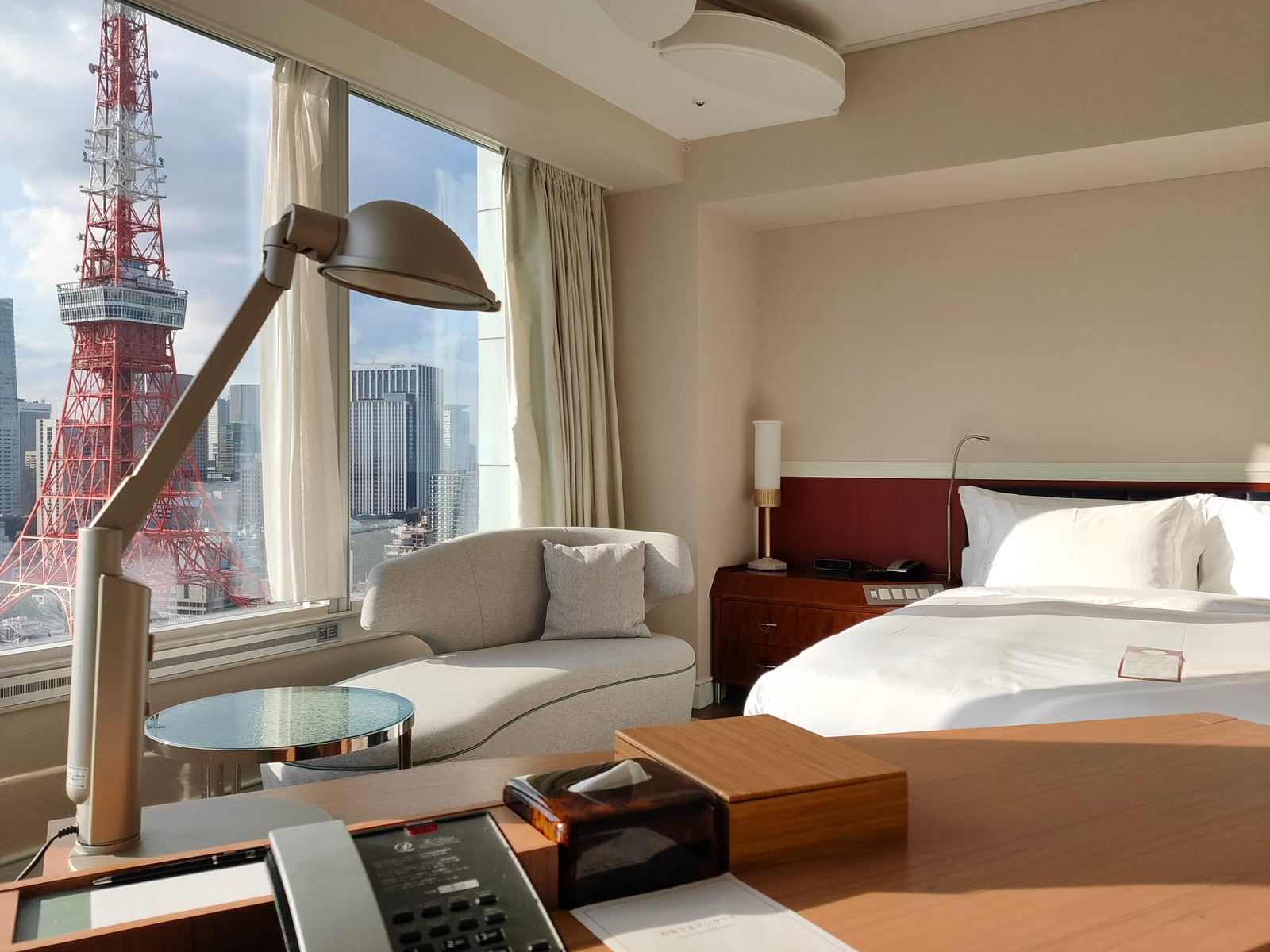
Yes, standard business hotels in Tokyo are notoriously compact, often averaging a tight 12 to 15 square meters. You will be playing luggage Tetris with your suitcases.
Airbnbs, especially in residential suburbs, offer more room to breathe, averaging 25 to 40 square meters with separate living areas. However, watch out for the steep stairs in older low-rise apartment buildings—most lack elevators. If you want a base with room for the whole family, Airbnbs win on square footage, but hotels win on vertical convenience and luggage storage services.
Which option is more cost-effective for solo travelers versus groups?
For solo travelers and couples, mid-range business hotels like APA, Sotetsu Fresa Inn, or Dormy Inn are incredibly cost-effective, offering clean rooms, pajamas, and daily housekeeping for ¥10,000 to ¥18,000 per night.
For groups of three or more, Airbnbs become highly economical. Sharing a multi-room house in a neighborhood like Yanaka or Koenji drops the per-person cost significantly. Combine that with a kitchen to cook supermarket wagyu, and you save thousands of yen. It's a great setup before heading out on our Shinjuku Night Walking Tour - Dark Side of Tokyo to experience the neon-drenched nightlife.
What are the hidden logistics of staying in a Tokyo Airbnb?
The biggest culture shock for Airbnb guests is Tokyo's obsessive waste management. You must meticulously separate combustibles, plastics, cans, and PET bottles, or face angry notes from neighbors.
Additionally, checking in requires submitting passport photos of all guests via a digital tablet, a strict legal mandate that can be clunky. Hotels handle all of this administrative friction seamlessly, offering 24/7 front desks, immediate check-in, and daily towel replacements without you lifting a finger.
Should you choose a hotel or Airbnb for your first Tokyo trip?
If it is your first time in Japan, book a hotel. The concierge service, effortless luggage shipping (Takkyubin) forwarding, and guaranteed English-speaking staff remove massive layers of friction.
For seasoned travelers who want to blend into a quiet residential alley, buy milk at the local Lawson, and hear the gentle rattle of the Yamanote line from a balcony, Airbnb provides that unvarnished slice of Tokyo life. To get your bearings first, consider booking our Tokyo City Highlights - Shibuya + Harajuku + Asakusa to confidently navigate both worlds.
Experience Tokyo Like a Local with Wabisabi
Whether you choose a sleek high-rise hotel or a quiet neighborhood Airbnb, let our expert guides show you the soul of the city on our boutique walking tours.
Book this tour →