Daytime Asakusa is an obstacle course of selfie sticks and tour flags. At 18:00, crowds vanish. Red lanterns illuminate temple halls, yakitori smoke drifts down side streets, and century-old drinking dens fill with regulars.
Why is visiting Sensoji Temple after dark better than during the day?
📷 Google Places
Sensoji's grounds stay open 24 hours. Floodlights illuminate the Five-Story Pagoda and Main Hall until 23:00. Foot traffic drops 90% after 17:00. Guests on our Tokyo Highlights - Shibuya + Harajuku + Asakusa tour return after dark for empty grounds.
💡 Insider tip: Stand directly under the giant red Kaminarimon lantern to examine the intricate dragon carving on its wooden base.
🕐 Grounds open 24/7; Illumination sunset–23:00; Main Hall 06:00–17:00💴 Free🚶 3 min walk from Asakusa Station Exit 1
What makes the painted shutters on Nakamise-dori worth seeing at night?
📷 Google Places
After merchants close, the Asakusa Emaki appears: murals across all 89 shop shutters along Nakamise-dori. Walking the 250-meter approach at 20:00 reveals Edo-era scenes, Sanja Matsuri processions, and Nihonga-pigment cherry blossoms.
💡 Insider tip: Walk backward from Hozomon Gate toward Kaminarimon to see the painted scenes in chronological order.
🕐 Daily 10:00 AM–5:00 PM💴 Free🚶 1 min walk from Asakusa Station Exit 1
Where can you get a free night view over Sensoji and Tokyo Skytree?
📷 Google Places
The Asakusa Culture Tourist Information Center's 8th-floor observation deck offers free panoramic views until 22:00. Designed by Kengo Kuma, the open-air balcony looks north over illuminated Nakamise-dori and east toward the 634-meter Tokyo Skytree.
💡 Insider tip: Grab a seat at the adjacent 8th-floor cafe for a ¥500 draft beer overlooking the illuminated temple axis.
🕐 Daily 9:00 AM–8:00 PM💴 Free🚶 1 min walk from Asakusa Station Exit 2
Where should you drink on Hoppy Street (Hoppy Dori)?
📷 Raita Futo from Tokyo, Japan / Wikimedia (CC BY 2.0)
Hoppy Street runs 80 meters west of Sensoji, packed with open-air izakayas like Daikokuya. Order a Shiro Hoppy and a bowl of stewed beef tendon (gyusuji nikomi) for around ¥1,200. Plastic curtains drop in winter.
💡 Insider tip: Most stalls charge a ¥300 to ¥500 table fee (otoushi), which includes a small starter dish.
🕐 Daily roughly 16:00–23:00 (varies by stall)💴 ¥1,500–¥3,000 per person🚶 3 min walk from Asakusa Station (Tsukuba Express) or 6 min from Tokyo Metro Asakusa Station
Where can you drink legendary electric cocktails at Kamiya Bar?
📷 Google Places
Founded in 1880, Kamiya Bar is Tokyo's oldest Western-style bar. Order the house herbal liqueur, Denki Bran: ¥300 for the standard 30% ABV or ¥400 for 40% Old label. Sip it neat with a draft beer chaser.
💡 Insider tip: Buy your drink tickets at the entrance register on the ground floor before sitting at a shared table.
🕐 Monday: 11:00 AM–7:30 PM; Tuesday: Closed; Wednesday: 11:00 AM–7:30 PM; Thursday: 11:00 AM–7:30 PM; Friday: 11:00 AM–7:30 PM; Saturday: 11:00 AM–7:30 PM; Sunday: 11:00 AM–7:30 PM💴 ¥300–¥1,500🚶 1 min walk from Asakusa Station Exit 3
Where can you soak in natural mineral waters near Sensoji at night?
📷 Google Places
Cross the Sumida River to Oshiage Onsen Daikokuyu. The retro sento features mineral-rich dark kuroyu water, an outdoor bath with Skytree views, and a roof deck. Entry is ¥550, with no tattoo restrictions. Open until 10:00.
💡 Insider tip: The open-air bath alternates daily between men and women. Check the front desk schedule before undressing.
🕐 Monday: 3:00 PM–10:00 AM; Tuesday: Closed; Wednesday: 3:00 PM–10:00 AM; Thursday: 3:00 PM–10:00 AM; Friday: 3:00 PM–10:00 AM; Saturday: 2:00 PM–10:00 AM; Sunday: 1:00 PM–10:00 AM💴 ¥550 for bath, ¥330 extra for sauna🚶 15 min walk east from Sensoji across Azuma Bridge, or 6 min walk from Oshiage Station
Where can you eat authentic Asakusa monjayaki late?
📷 Google Places
At Monja Moheji on Nishisando, staff fry dashi batter, cabbage, mentaiko, and mochi on tabletop teppan griddles past 21:00. Scrape the sizzling batter flat using small metal spatulas called hagashi. Pair with cold highballs.
💡 Insider tip: Order the mentaiko, mochi, and cheese combination. It is Tokyo's benchmark flavor profile.
🕐 Monday: 10:45 AM–11:00 PM; Tuesday: 10:45 AM–11:00 PM; Wednesday: 10:45 AM–11:00 PM; Thursday: 10:45 AM–11:00 PM; Friday: 10:45 AM–11:00 PM; Saturday: 10:30 AM–11:00 PM; Sunday: 10:30 AM–11:00 PM💴 ¥1,500–¥2,500 per person🚶 4 min walk from Asakusa Station (Tsukuba Express)
What is Asakusa Underground Street (Chikagai) like after hours?
📷 Denys Nevozhai / Unsplash
Built in 1955, Asakusa Underground Street is Japan's oldest surviving subterranean shopping concourse. Descend near Tobu Asakusa station into raw concrete halls where Fuku-chan serves fried yakisoba on metal plates for under ¥400 under bare fluorescent tubes.
💡 Insider tip: Bring 100-yen coins and 1,000-yen notes. Vendors in this underground passage rarely accept IC or credit cards.
🕐 Daily roughly 10:00–21:30 (stalls keep independent hours)💴 ¥400–¥1,500🚶 Directly connected to Tokyo Metro Ginza Line Asakusa Station underground concourse
Where can you watch evening comedy or explore Tokyo's original theater strip?
📷 Google Places
Rokku Broadway was Tokyo's premier Meiji-era theater district. Asakusa Engei Hall stages rakugo storytelling and manzai comedy nightly until 21:00. Outside, vintage cinema billboards line the pedestrian street under neon lights.
💡 Insider tip: Rakugo performances are entirely in Japanese, but the theater crowd pouring into the street at curtain call is pure Shitamachi culture.
🕐 Daily 11:00 AM–8:30 PM💴 ¥3,000 for theater tickets; free to stroll🚶 2 min walk from Asakusa Station (Tsukuba Express)
Where can you get fresh melonpan warm out of the oven in the evening?
📷 Google Places
Asakusa Kagetsudo's Nishisando shop ferments its melonpan dough for three hours, yielding a crisp sugar crust and an airy interior. Arrive between 17:30 and 18:30 to skip the daytime queues before sales end.
💡 Insider tip: Eat it within ten minutes. The crisp sugar crust softens as steam escapes the interior.
🕐 Monday: 9:00 AM–4:30 PM; Tuesday: 9:00 AM–4:30 PM; Wednesday: 9:00 AM–4:30 PM; Thursday: 9:00 AM–4:30 PM; Friday: 9:00 AM–4:30 PM; Saturday: 9:00 AM–5:00 PM; Sunday: 9:00 AM–5:00 PM💴 ¥300 for plain, ¥600 with soft-serve ice cream filling🚶 3 min walk from Sensoji Main Hall, near Nishisando Arcade
Where can you find craft beer brewed right along the Sumida River?
📷 Google Places
Drink craft beer at Flamme d'Or beneath Philippe Starck's golden flame on the Sumida River, or take the elevator to the 22nd-floor Asahi Sky Room for skyline draft pours overlooking evening river traffic.
💡 Insider tip: The Asahi Sky Room has no cover charge. Order a beer at the counter and take in the view.
🕐 Daily 11:30 AM–10:00 PM💴 ¥700–¥1,200 per drink🚶 4 min walk east from Asakusa Station across Azuma Bridge
How can you walk along the Sumida River Terrace toward the illuminated Azuma Bridge?
📷 Marek Okon / Unsplash
Descend ramps beside Azuma Bridge to the paved Sumida River Terrace. This quiet 1.5-kilometer boardwalk muffles street noise and frames clear views of Tokyo Skytree, an easy walk after our Tokyo tour · Día 1.
💡 Insider tip: Watch for the futuristic glass waterbuses designed by anime legend Leiji Matsumoto docking at Asakusa Pier.
🕐 Open 24/7💴 Free🚶 2 min walk from Tokyo Metro Asakusa Station Exit 4
Where can you shop for Japanese knives and kitchenware after hours?
📷 Google Places
When Kappabashi closes at 17:30, the four-story Don Quijote on Rokku Broadway stays open 24 hours. The second floor stocks Sakai chef knives, cast-iron teapots, and matcha sweets. Tax-free counters run all night.
💡 Insider tip: Bring your passport to process the 10% tax refund at the register for purchases over ¥5,000.
🕐 Open 24 hours💴 Varies by purchase🚶 1 min walk from Asakusa Station (Tsukuba Express) or 7 min walk from Sensoji
What are the best izakaya alleys around Asakusa Nishi-sando and Okuyama Omiyage?
📷 Iban Lopez Luna / Pexels
Alleys along Okuyama Omiyage and Nishi-sando wrap quietly behind Sensoji's pagoda. Small wooden stalls serve grilled tare chicken skewers, salted ginkgo nuts, and chilled sake under red lanterns without the noise of Hoppy Street.
💡 Insider tip: Look for a noren curtain with simple kanji. If counter stools are empty, the cook will wave you inside.
🕐 Daily 17:00–23:00 (varies by establishment)💴 ¥1,500–¥3,000 per person🚶 3 min walk west of Sensoji Main Hall
Where should you go for late-night ramen near Sensoji?
📷 Google Places
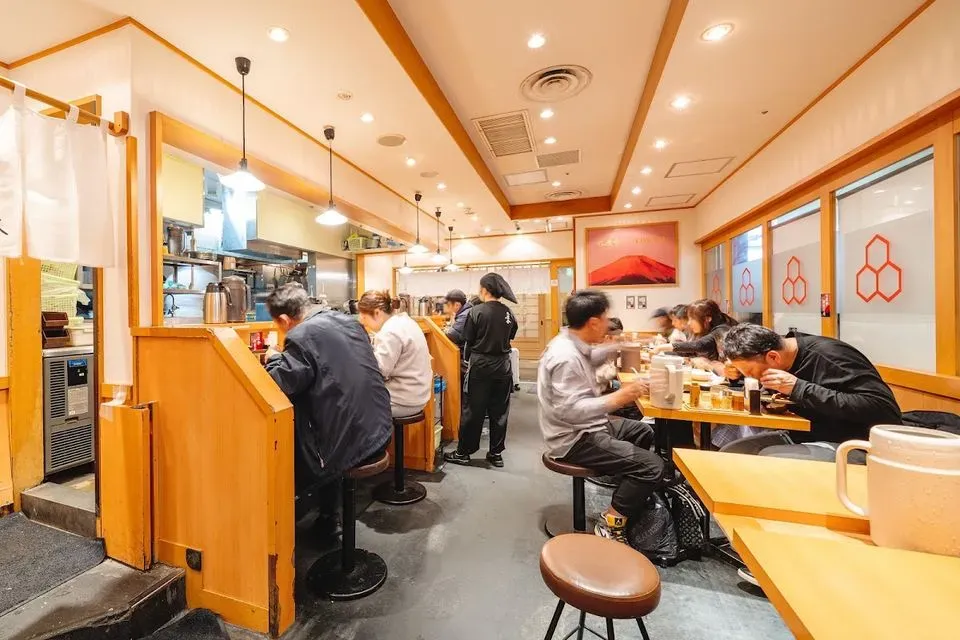
Just off Nakamise-dori, Yoroiya Ramen simmers a classic Tokyo broth of chicken, pork, dried sardine, and yuzu peel. Every bowl comes with thin chashu pork, and their hand-folded gyoza arrive crisp from the pan.
💡 Insider tip: Order the Futago-tamago Ramen for double-yolk hard-boiled eggs, considered an auspicious omen in old Shitamachi folklore.
Sensoji Temple's Kannondo Main Hall closes its doors at 17:00 (16:30 from October to March). However, the temple grounds, gates, and pagodas remain completely open to walk through 24 hours a day, with architectural floodlights active until 23:00 nightly.
Is Asakusa safe to walk around late at night?
Yes, Asakusa is exceptionally safe to explore late into the evening. Violent crime is rare, and the streets around Sensoji, Hoppy Street, and the river terrace are well-lit and frequented by locals, dog walkers, and diners well past midnight.
Do shops on Nakamise Street stay open after dark?
No, retail souvenir and snack stalls along Nakamise-dori begin packing up around 17:00 and are fully shuttered by 18:30. Visiting after closing is recommended to view the traditional Asakusa Emaki murals painted across the pulled-down metal shutters.
How late do the bars and izakayas on Hoppy Street stay open?
Most izakayas along Hoppy Street close between 22:30 and 23:30, with last food orders called around 22:00. If you want to drink past midnight, head to the western alleys near Rokku Broadway or international bars near Asakusa Station.
Can you see Tokyo Skytree lit up from Sensoji Temple?
Yes, you can see the glowing 634-meter Tokyo Skytree framed directly behind the temple buildings from the eastern edge of Sensoji grounds and from the nearby Sumida River riverbank, illuminated nightly with alternating cyan, purple, and seasonal light patterns.