Tokyo omakase counters intimidate first-timers with unwritten rules. No printed menus exist; the chef controls every bite. Here is what happens across twenty synchronized courses.
What is omakase and what does the word actually mean?
The word omakase comes from the verb makaseru: to entrust or leave to another.
You entrust every course to the chef instead of ordering à la carte.
Menus change daily with morning auctions at Toyosu Market, yielding 15 to 22 tailored servings.
How does an omakase restaurant differ from a regular sushi bar?
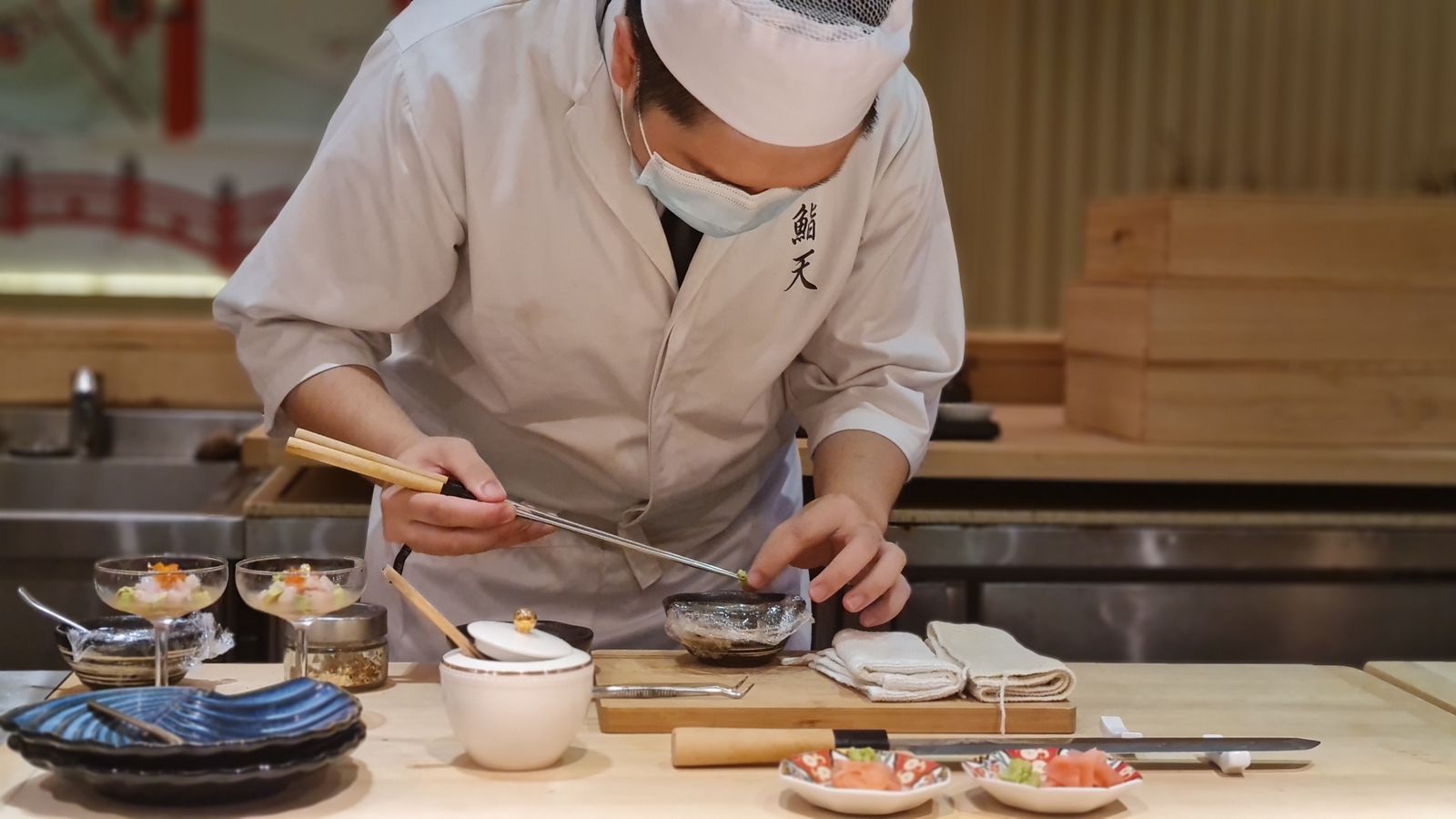
A classic omakase counter seats 6 to 10 guests around a central hinoki wood prep board.
You will find no printed menus, conveyor tracks, or private booths.
Chefs serve all diners simultaneously across strict two-hour seatings. Food preparation is the sole entertainment.
See how fish sourcing supplies high-end kitchens by walking through wholesale districts on Tokyo tour · Día 2.
What is the typical sequence of an omakase meal?
A standard service follows a deliberate three-act arc built to steer your palate.
The meal begins with 4 to 6 otsumami: small hot and cold dishes like steamed abalone or grilled barracuda.
Next come 10 to 12 nigiri pieces, progressing from lean white fish to oily mackerel and fatty tuna.
The finale brings sweet tamagoyaki omelet, hot red miso soup, and roasted green tea.
Should you eat nigiri with your hands or chopsticks?
Eat nigiri with clean fingers. It is traditional, accepted, and often preferred by sushi masters.
Top itamae pack sushi rice with tiny air pockets that collapse under chopstick pressure.
Chopsticks are strictly for opening sashimi courses, pickled ginger, and hot appetizers.
Each seat provides an oshibori hot towel and a damp fingertip cloth to clean your hands between bites.
Do you need to dip omakase sushi in soy sauce?
Never dip omakase nigiri into soy sauce unless the chef tells you to.
Every piece arrives pre-seasoned with nikiri shoyu, a house-simmered blend of soy sauce, mirin, sake, and dashi.
Dunking nigiri into soy sauce dissolves the warm rice, drowns the fish, and insults the chef's seasoning.
Why does the chef serve sushi one piece at a time?
Chefs enforce a strict 10-second window between plating nigiri and your first bite.
Sushi rice, or shari, is served at human body temperature: roughly 36 degrees Celsius.
Wait 30 seconds and the rice cools, stiffens, and loses its contrast with chilled raw fish.
What drinks should you pair with an omakase meal?
Dry karakuchi junmai sake is standard. It slices through tuna fat without leaving sugar behind.
Draft beer suits initial appetizers. Cold roasted barley tea provides a traditional non-alcoholic reset.
Skip sweet cocktails and heavy red wine. Both coat the tongue and drown subtle marine aromatics.
For neighborhood drinking culture, the Eat, Sip & Explore Like a Local: Ekoda Food & Cafe Experience offers a casual contrast to counter dining.
How much does an omakase dinner cost in Tokyo?
Lunch seatings in residential wards like Setagaya or Meguro cost ¥6,000 to ¥12,000 per diner.
Dinner in Ginza, Roppongi, or Akasaka runs ¥25,000 to ¥45,000 per person before drinks.
High-end counters add an 8 to 10 percent service fee. Dinner for two with premium sake often exceeds ¥70,000.
How strictly do omakase restaurants enforce dress codes and timing?
Punctuality is rigid. Arriving 10 minutes late can trigger immediate cancellation with zero refund.
Chefs serve all diners in synchronized rounds. A late arrival disrupts service for the entire counter.
Dress smart casual. Counters ban shorts, flip-flops, and synthetic sportswear.
Never wear perfume or cologne. Strong scents destroy the subtle aroma of vinegar and sea urchin.
How do you handle dietary restrictions and allergies at an omakase counter?
Submit dietary requests at least 48 hours early through your booking platform.
Chefs purchase exact quantities at morning auctions. Same-day substitutions are impossible.
Some counters handle shellfish or gluten allergies, but traditional sushi bars decline bookings if modifications alter the core menu.
Is photography permitted during an omakase service?
Silent smartphone photos of individual sushi pieces on your plate are generally fine.
Mute your shutter sound, kill the flash, and avoid shooting long videos that distract the kitchen.
Never point cameras at the chef or neighboring diners without verbal permission.
Can you order extra pieces at the end of omakase?
Most counters run an okonomi round once soup and tamagoyaki arrive.
When the chef calls okawari, order repeat favorites or request specific cuts from the board.
Supplemental pieces add ¥800 to ¥2,500 each to your final bill, priced by rarity.
How do you book a top omakase restaurant without a Japanese phone number?
TableCheck, Omakase.in, and Pocket Concierge let foreign credit cards book without Japanese phone numbers.
Reservations generally open at 10:00 AM Tokyo time on the first day of the preceding month.
Cancellation fees bite hard: 100 percent penalties apply within 72 hours of dining.
Explore Tokyo's Culinary Secrets with Wabisabi
From dawn market walks to evening counter culture, our guides show you how Tokyo eats. Join a small-group walking tour and skip the tourist traps.
Book this tour →