Todaiji Kagami-ike Pond
Good to know before you go
- Getting there
- Kintetsu-Nara Station · 20 min walk (Kintetsu Nara Line)
- Admission
- Free
- Time needed
- 10–20 min
- Best time to go
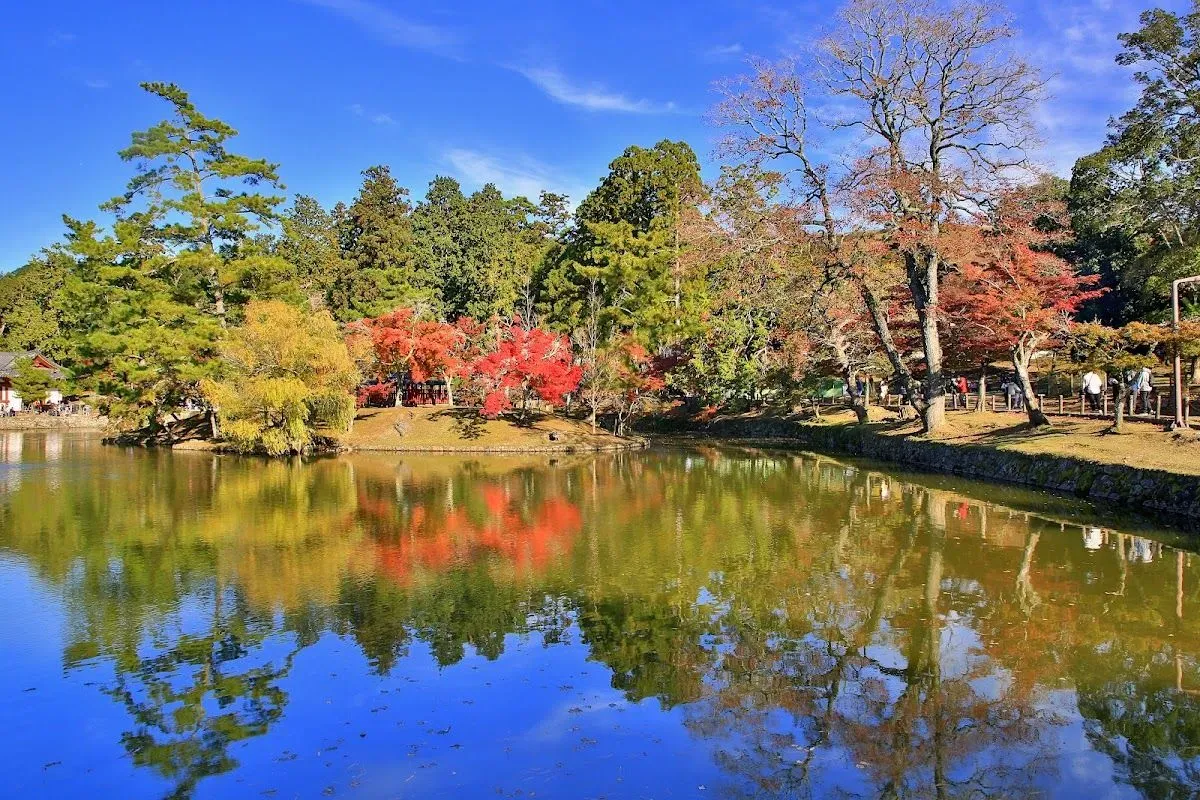
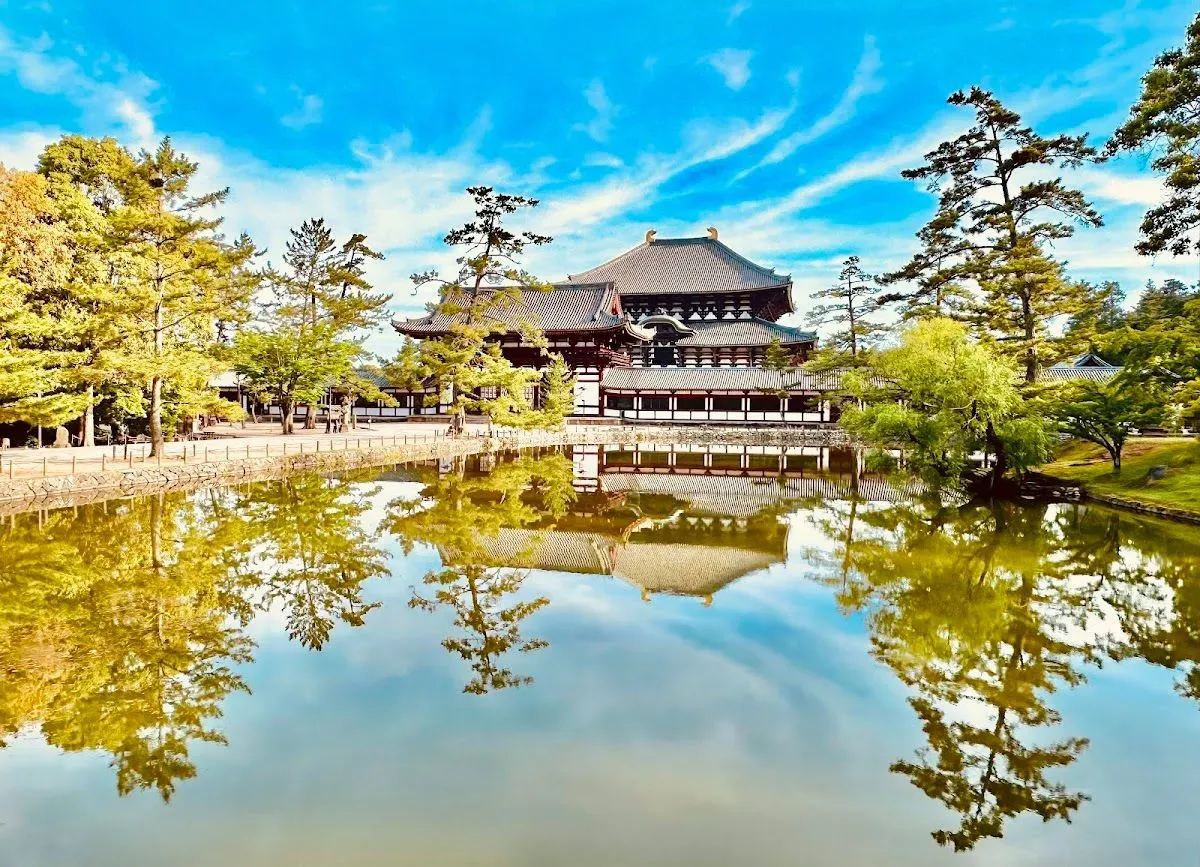
- Early morning on windless days for clear water reflections of the temple facade, or mid-November for autumn foliage.
About
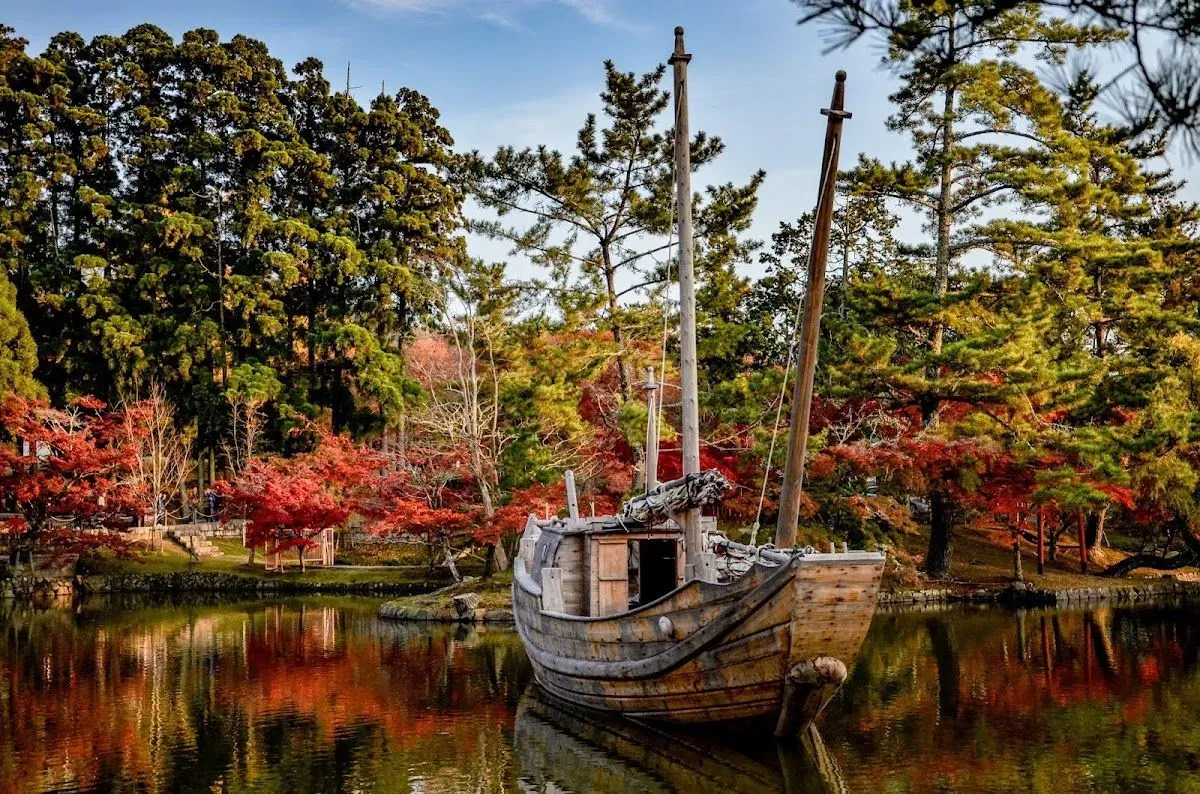
Located directly in front of Todai-ji's Great Buddha Hall, Kagami-ike (Mirror Pond) is famous for its stunning, glassy reflections of the temple's massive wooden facade and surrounding maple trees. It features a small, picturesque shrine island accessed by a stone bridge, making it a prime photography spot. Expect a peaceful atmosphere, though you will share the shoreline with Nara's famous, free-roaming sacred deer.
What Japanese guides note
Kagami-ike Pond sits in the freely accessible open grounds between Nandaimon Gate and Chūmon Gate. A common misunderstanding among visitors is that they can walk onto the central islet, but access across the bridge is fenced off and prayers toward Itsukushima Shrine must be made from the shoreline. For glassy reflections of the Great Buddha Hall and Chūmon Gate, visitors should arrive early in the morning before daytime breezes ruffle the surface.
Details from local sources
- The pond contains wataka, an indigenous cyprinid fish designated as a Nara Prefecture Natural Monument, which was transferred here in 1914 from the ruins of Uchiyama Eikyu-ji temple. [source]
- Every year on May 2 during the Shomu Tenno-sai festival, a temporary floating stage is built on the pond for Bugaku and Noh performances. [source]
- During the Daibutsu-sama Autumn Festival on October 15, a temporary stage is erected on Kagami-ike to host celebratory Noh performances. [source]
- Crossing the bridge onto the shrine island is prohibited, requiring visitors to pray toward Itsukushima Shrine from the main approach path. [source]
Insider Tip
Visit in the early morning or late afternoon when the wind dies down to get the most pristine, mirror-like reflections on the water.
Frequently asked
Can visitors walk onto the island in the middle of Kagami-ike?
No. Although a stone bridge connects the shoreline to the islet housing Itsukushima Shrine, the bridge is blocked by a barricade. Visitors may not cross onto the island, and prayers must be made from the main stone path running between Nandaimon and Chūmon.
Is an admission fee required to see Kagami-ike Pond?
No admission ticket is required. Kagami-ike is located in the open precinct outside the gated perimeter of the Great Buddha Hall. Entrance fees to Todai-ji only apply if you enter the ticketed enclosures of the Daibutsuden, Hokke-do, Kaidan-in, or the Todai-ji Museum.
What special performances take place on Kagami-ike Pond?
On May 2 during the Shōmu Tennō-sai, a floating stage is erected over Kagami-ike to present Bugaku court dance and celebratory Noh. A similar floating stage is constructed on October 15 during the Daibutsu-sama Autumn Festival to stage Noh drama for visitors.
Our Nara walking tours

Photos