Meiji Jingu
Good to know before you go
- Getting there
- Harajuku Station · 1 min walk (JR Yamanote Line)
- Hours
- Varies monthly by sunrise and sunset: opens 5:00–6:40, closes 16:00–18:30
- Admission
- Free (¥500 maintenance fee for Inner Garden / Meiji Jingu Gyoen)
- Time needed
- 60–90 min
- Best time to go
- Early morning at sunrise opening, before sightseeing buses arrive around 9:30 and the gravel approaches become crowded
Hours can change on holidays — check the official site before travelling.
About
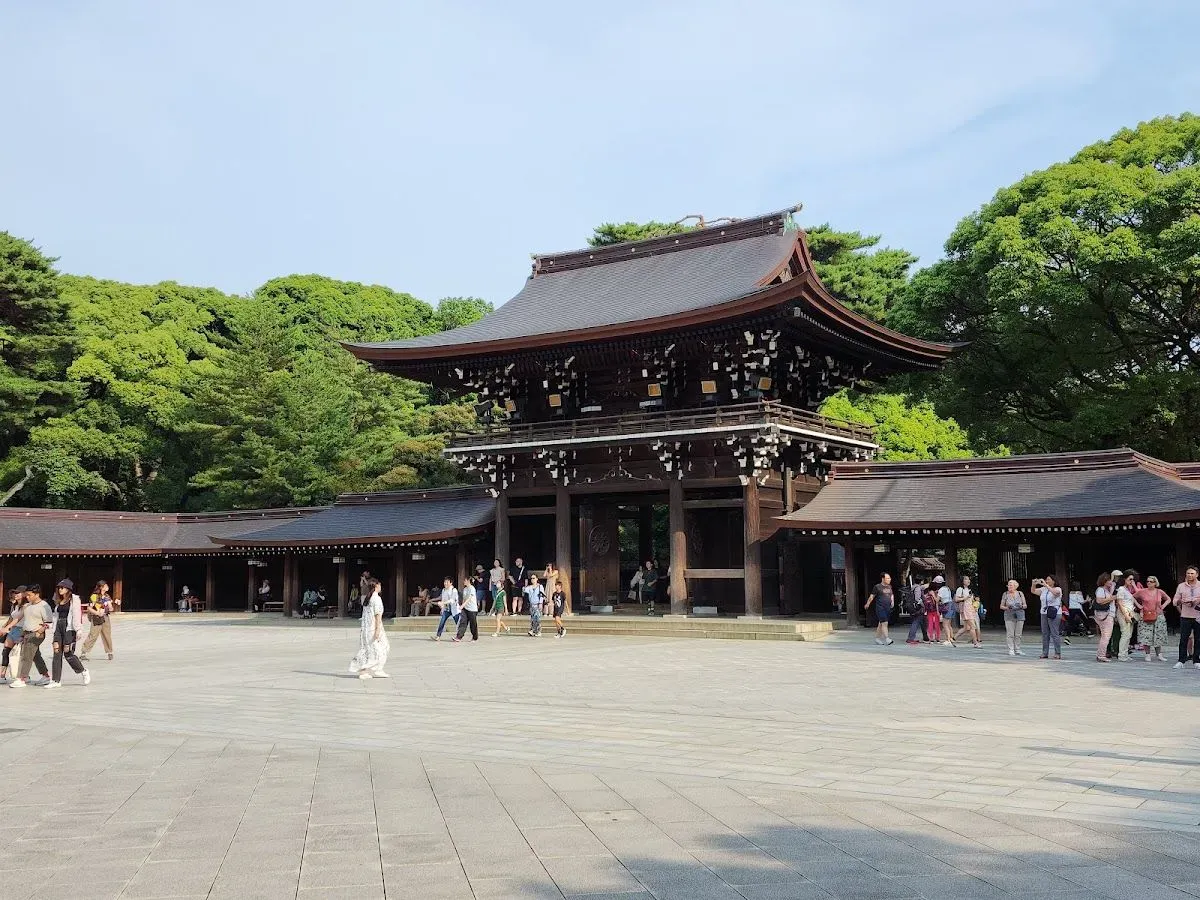
Meiji Jingu is Tokyo's grandest Shinto shrine, dedicated to the deified spirits of Emperor Meiji and Empress Shoken. What makes it spectacular is its location: a dense, tranquil 170-acre forest of over 100,000 trees donated from across Japan, offering an instant escape from the Shibuya bustle. Expect a peaceful walk under massive wooden torii gates, towering wine barrels on display, and the chance to witness a traditional Shinto wedding procession.
What Japanese guides note
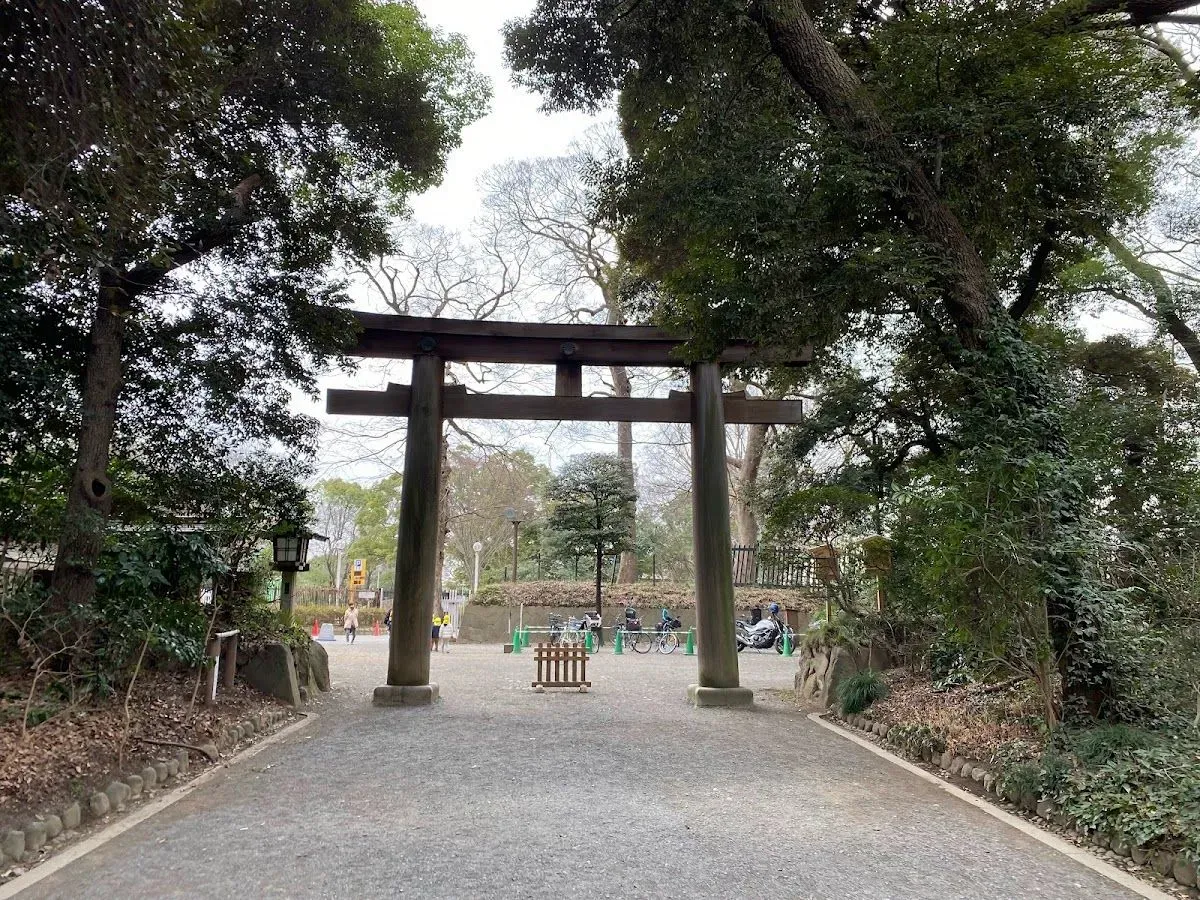
Meiji Jingu spans 700,000 square meters, and reaching the main worship hall takes 10 to 15 minutes on foot from any of the three perimeter torii gates across broad gravel pathways. Shinto etiquette encourages bowing once before passing under each torii gate and walking along the edges of the gravel path, leaving the center path clear for the deities. Unlike neighbourhood shrines, the gates close strictly at sundown every day and remain locked until daybreak.
Details from local sources
- Meiji Jingu does not give fortune rankings like daikichi or kyo on its omikuji; instead, the slips, called Omigokoro, feature moral waka poems composed by Emperor Meiji and Empress Shoken, and the grounds provide no racks to tie them because visitors are expected to keep them. [source]
- The surrounding 70-hectare forest is an artificial biome designed in 1915 by forestry expert Seiroku Honda to become a self-sustaining primeval-style forest over 150 years, deliberately relying on broadleaf evergreens like oak and camphor rather than the cryptomeria trees pushed by then-cabinet ministers. [source]
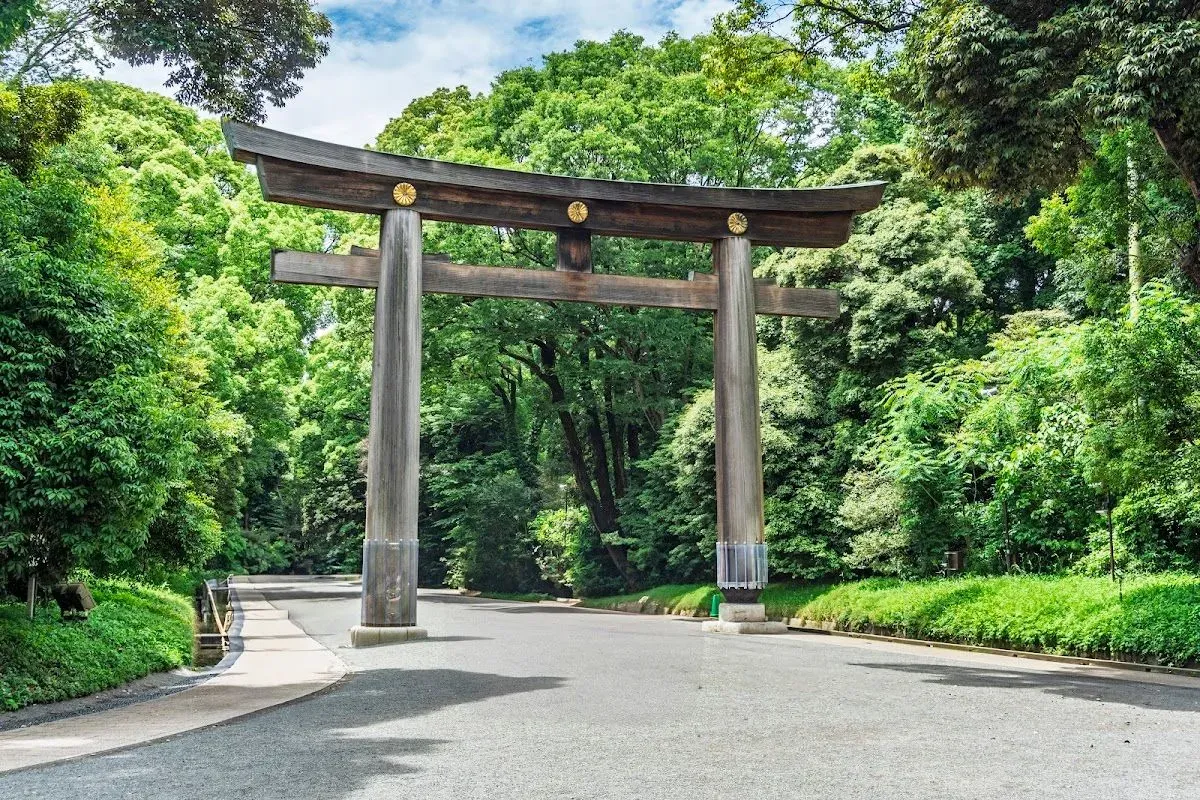
- The 12-meter-tall Otorii standing at the intersection of the south and north approaches is the largest wooden myojin-style torii in Japan, rebuilt in 1975 using a 1,500-year-old Taiwanese cypress after the original 1920 structure was struck by lightning. [source]
- Two sacred camphor trees planted in 1920 in front of the main hall, bound together by a sacred shimenawa rope, are called Meoto Kusu and serve as a designated prayer focal point for marriage and relationship harmony. [source]
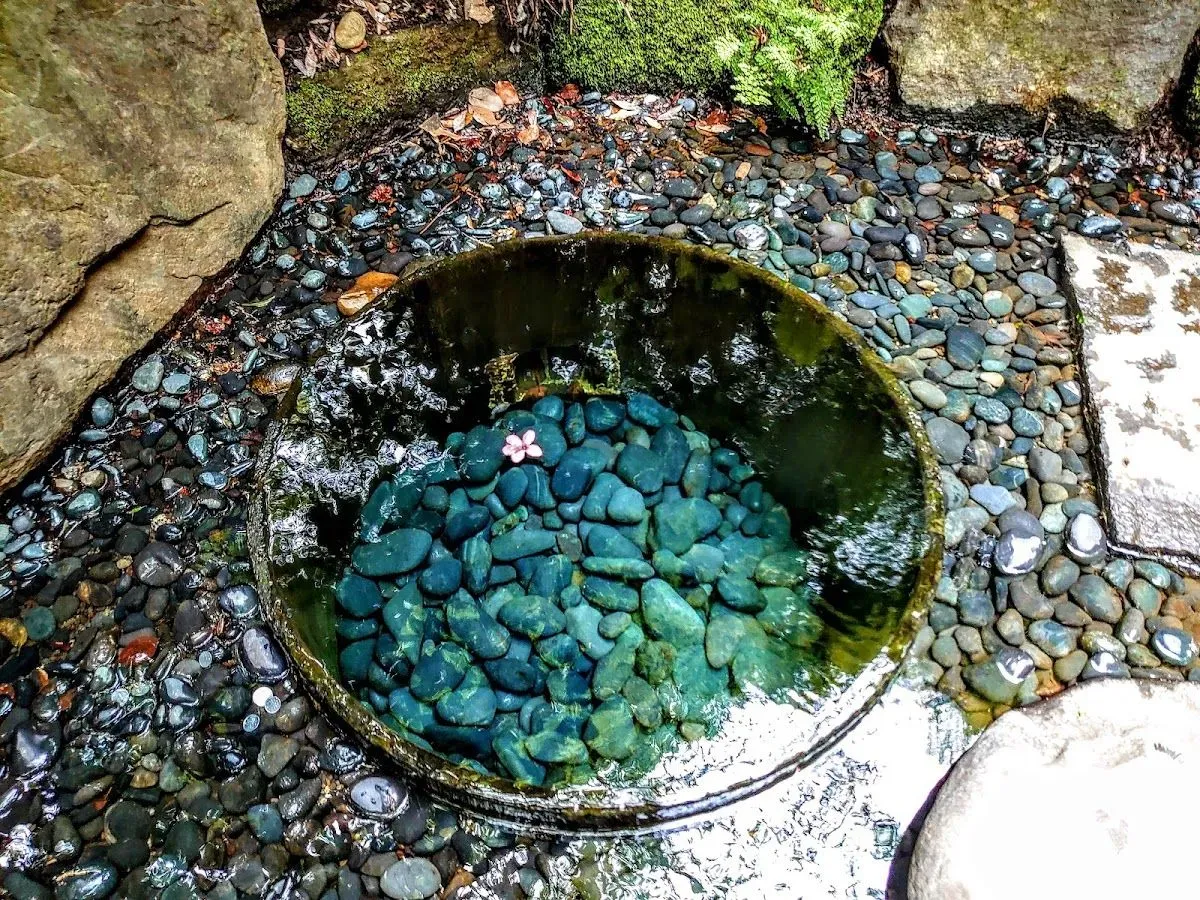
- Kiyomasa no Ido, a historical spring inside the Inner Garden attributed to warlord Kato Kiyomasa, maintains a constant water temperature of roughly 15°C year-round and discharges approximately 60 liters of natural groundwater per minute into the Shibuya River basin. [source]
- The shrine has three separate access approaches—Minami-sando from Harajuku, Kita-sando from Yoyogi, and Nishi-sando from Sangubashi—and walking from any entrance torii to the central sanctuary requires at least 10 minutes. [source]
Insider Tip
Enter from the Harajuku side in the morning, and visit the inner iris garden (Gyoen) for a small fee to see Kiyomasa's Well.
Frequently asked
Why are there barrels of French wine displayed on the approach?
Alongside traditional sake barrels, Meiji Jingu displays French wine barrels along the South Approach. Emperor Meiji embraced Western knowledge and enjoyed wine from Burgundy. Winemakers from Burgundy donate these barrels as an offering to honour his patronage and encourage ongoing cultural friendship between France and Japan.
Can you visit Meiji Jingu at night?
No. Meiji Jingu opens at sunrise and closes at sunset every day, adjusting gate timings each month. Gates open between 5:00 and 6:40 and close between 16:00 and 18:30. The only overnight opening occurs on New Year's Eve through New Year's Day for Hatsumode.
How does Meiji Jingu's omikuji differ from regular shrines?
Meiji Jingu dispenses Omigokoro, which omits traditional fortune grades like great blessing (daikichi) or bad luck (kyo). Instead, slips display one of 30 ethical waka poems written by Emperor Meiji or Empress Shoken. Visitors are expected to take the slip home as moral guidance rather than tying it to trees.
What is the correct worship etiquette at the main sanctuary?
Purify your hands and mouth at the temizuya water pavilion before reaching the hall. At the offering box, bow slightly, toss a coin, bow deeply twice, clap your hands twice in front of your chest, offer a silent prayer, and conclude with one final deep bow.
How long is the walk from Harajuku Station to the shrine hall?
Although Harajuku Station sits right outside the outer torii gate, walking through the gravel forest approach to the inner main sanctuary takes 10 to 15 minutes each way. Comfortable, flat walking shoes are strongly recommended, as walking on loose gravel can prove tiring in heels.
Our Tokyo walking tours


On the same walk
Photos