Half the English travel guides for Odaiba still tell you to ride the giant Ferris wheel at Palette Town or soak at Oedo Onsen Monogatari, even though both closed years ago. The reclaimed waterfront island underwent massive redevelopment, ditching 1990s bubble-economy remnants in favor of sharper attractions. If you know which stops to pick, an afternoon on Tokyo Bay remains one of the city's most distinct outings.
1. Life-Sized Unicorn Gundam — The 19.7-Metre Transforming Mecha
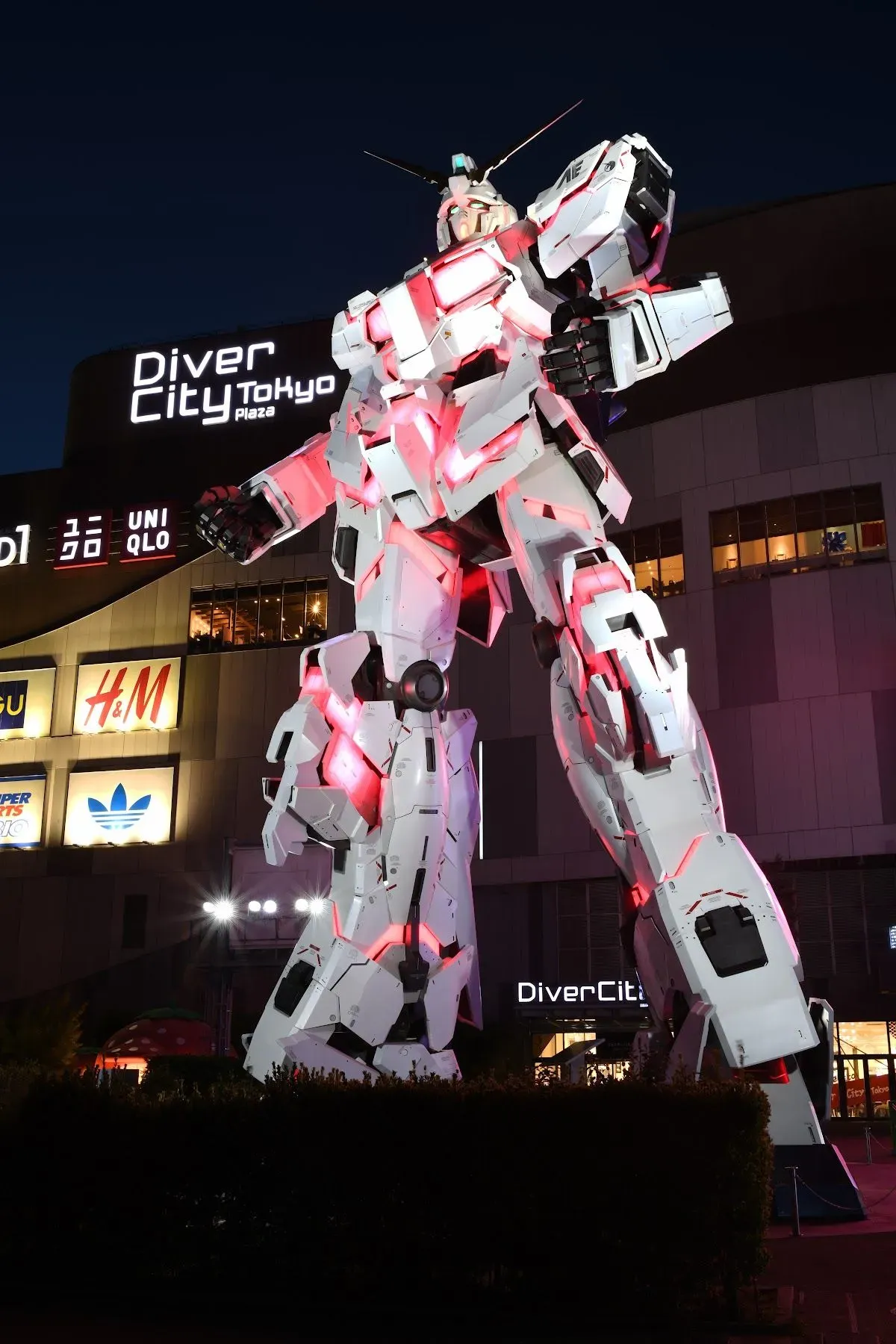
The life-sized RX-0 Unicorn Gundam statue stands 19.7 meters outside DiverCity Tokyo Plaza, executing four motorized transformation sequences daily between Unicorn Mode and Destroy Mode alongside nighttime light shows that run across Tokyo Bay every thirty minutes from 19:00 to 21:30. The statue shifts armor plates, expands its horn into a V-fin, and flashes crimson psycho-frame LED lighting during two-minute transformation sequences at 11:00, 13:00, 15:00, and 17:00. Nighttime brings anime projection mapping onto the mall facade behind it. While casual sightseers crowd the front steps, anime enthusiasts on our Tokyo friki tour prefer standing twenty paces back on the southern deck for a clear view above the sea of smartphone screens.
2. Miraikan — Hands-on Robotics and Earth Science at National Scale
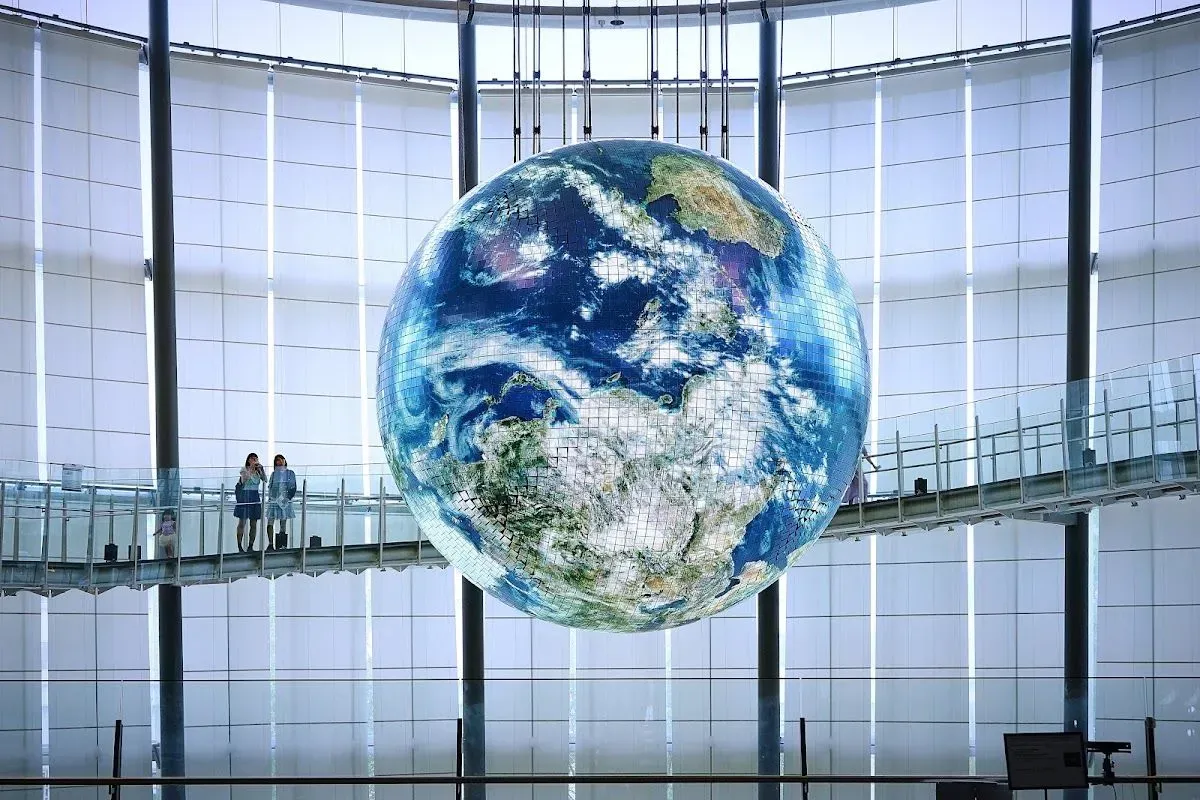
Miraikan presents cutting-edge Japanese scientific research through hands-on robotics galleries and the striking Geo-Cosmos, a six-meter suspended aluminum globe displaying near-real-time satellite weather patterns across millions of organic LED pixels for an affordable adult admission price of just ¥630. Unlike typical science centers aimed strictly at toddlers, Miraikan engages with real technical challenges like deep-sea exploration, genome sequencing, and android ethics. The centerpiece Geo-Cosmos sphere hangs over a sunken lounge with leather recliners, allowing you to track global cloud movements compiled daily from satellite feeds. Demonstrations featuring autonomous delivery bots and lifelike androids run throughout the afternoon.
3. Daiba Park (No. 3 Battery) — The 1853 Edo-Era Fort Hidden Behind the Malls
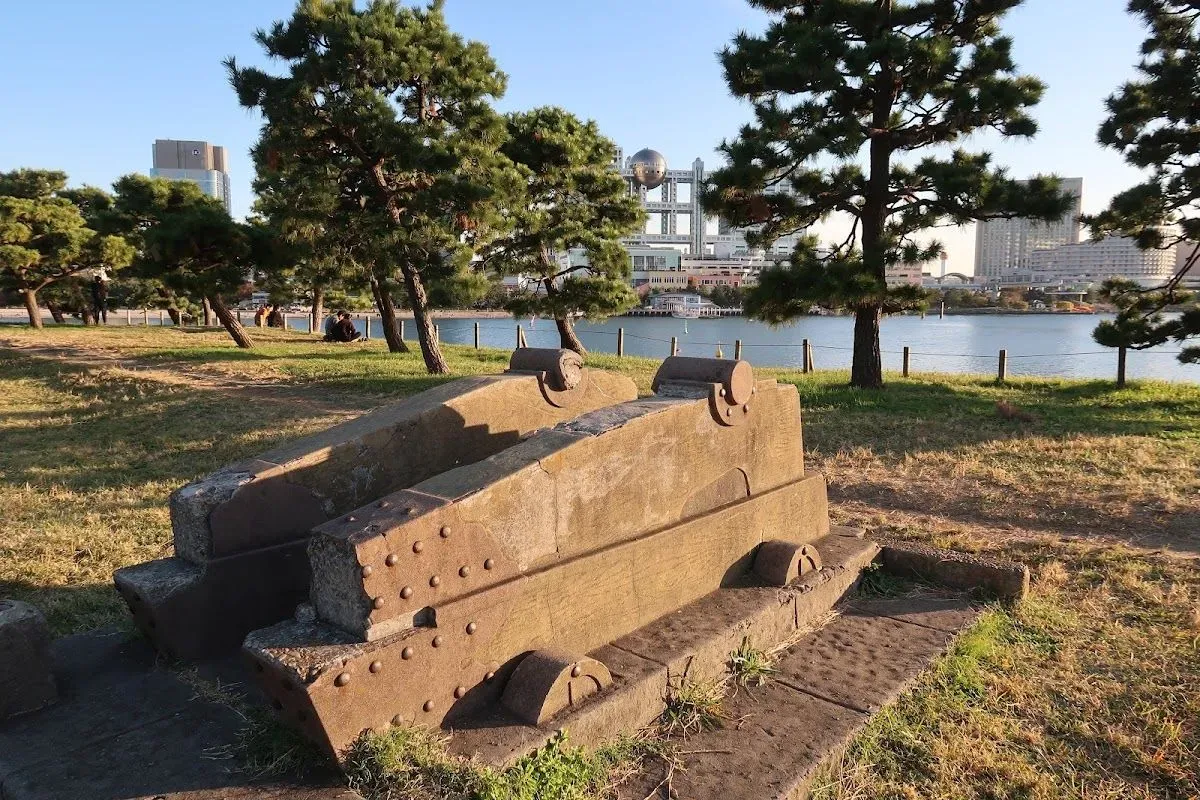
Daiba Park preserves the stone ramparts and powder magazine ruins of Battery Number Three, an offshore artillery island constructed by the Tokugawa shogunate in 1853 to defend Tokyo against American gunboats that now provides a quiet, unpaved lawn overlooking the harbor. The name Odaiba literally refers to the defensive cannon platforms ordered by the shogunate after Commodore Perry sailed into Edo Bay. Most tourists never realize this square island remains intact at the far end of the seaside boardwalk. Connected to the mainland by a narrow concrete causeway, it features original stone walls, magazine depressions, and grassy ramparts without a vending machine or retail sign anywhere in sight.
4. Odaiba Seaside Park — Tokyo Bay Sunsets and Rainbow Bridge Views
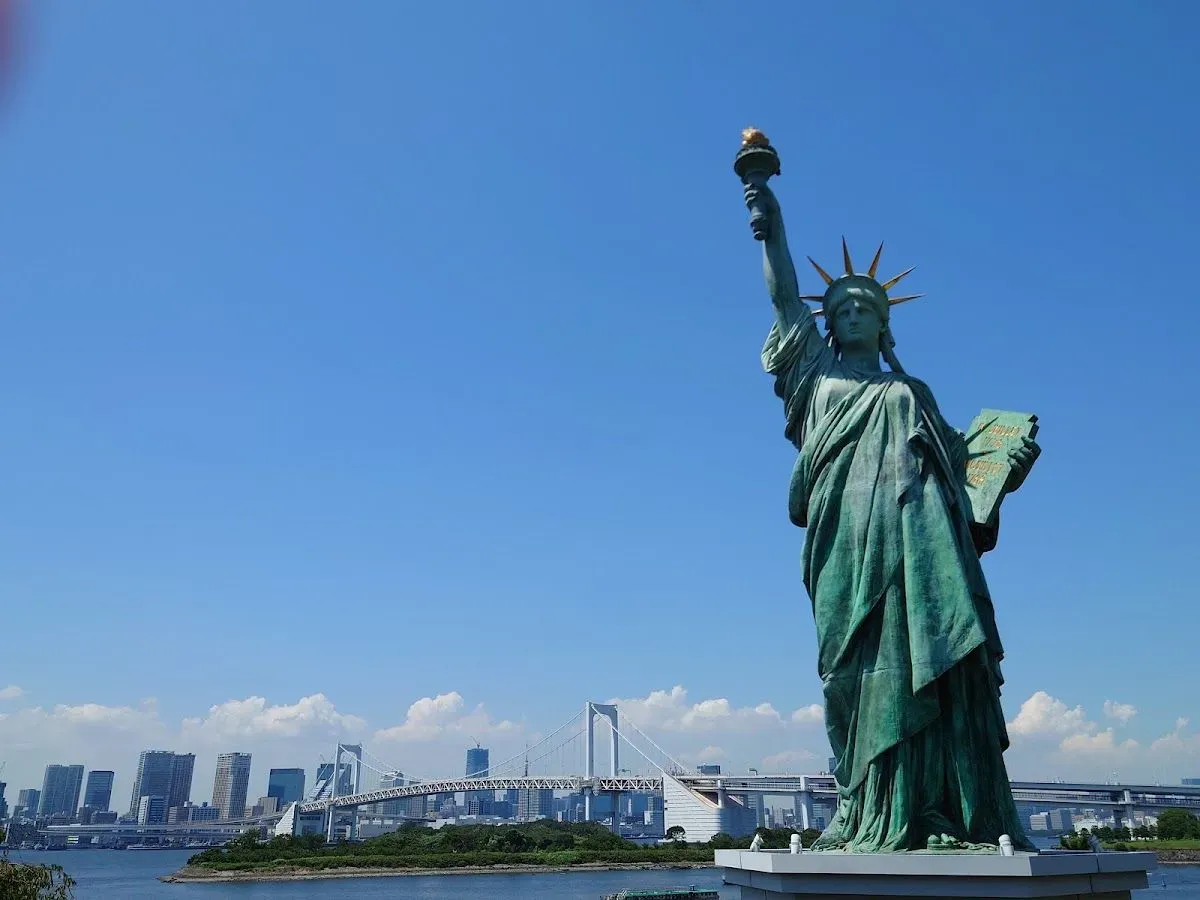
Odaiba Seaside Park spans an 800-meter sandy shoreline along Tokyo Bay that delivers unobstructed skyline vistas of the 798-meter Rainbow Bridge and the waterfront's 12-meter Statue of Liberty replica, making it the city's premier evening walking promenade despite strict swimming bans. The 800-meter beach consists of sand imported from the Izu Islands. Signs clearly ban swimming due to harbor boat traffic and urban runoff, but it remains one of Tokyo's most scenic sunset walks. We cover this waterfront section alongside Tsukiji and Ginza on our private Tokyo tour · Día 2, timing our arrival right when the suspension bridge cables switch on their evening white illuminations.
5. Tokyo Water Taxi & Himiko Ferry — Cruising Beneath Rainbow Bridge
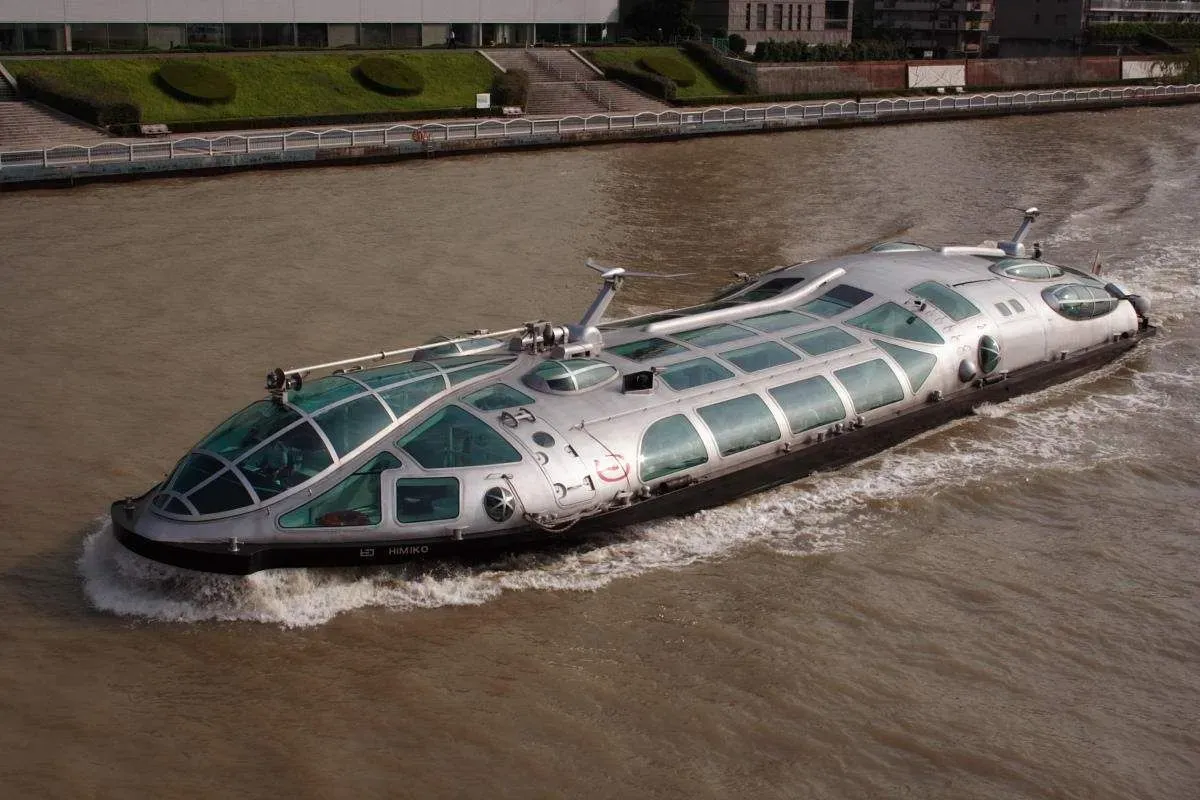
The futuristic Himiko and Hotaluna river ferries designed by anime legend Leiji Matsumoto operate direct routes between Odaiba Seaside Park and Asakusa, gliding passengers beneath Rainbow Bridge across Tokyo Bay for ¥1,720 to bypass crowded rail transfers with panoramic harbor views. Skipping the train ride back to central Tokyo in favor of the water bus saves walking time and gives you an unmatched view looking straight up into the undercarriage of Rainbow Bridge. The metallic, tear-drop hulls feature floor-to-ceiling tinted glass and an open observation roof on the Hotaluna and Queen Emeraldas models. The 50-minute journey to Asakusa passes directly through Tokyo's working sluice gates along the Sumida River.
6. Daiba 1-Chome Shotengai — Showa-Era Arcade and Retro Candy Stalls
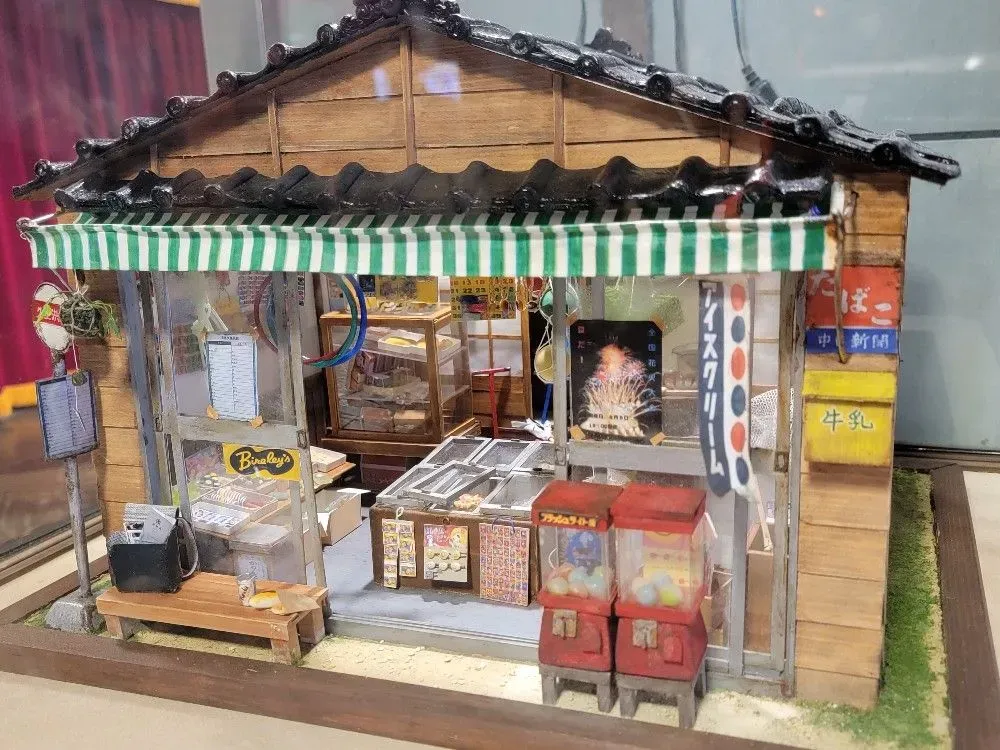
Daiba 1-Chome Shotengai recreates a bustling 1960s Tokyo neighborhood across the fourth floor of DECKS shopping mall, housing over a hundred operational Showa-era arcade cabinets, vintage pinball machines, retro capsule dispensers, and nostalgic penny-candy counters accepting spare 10-yen coins. Tucked away inside DECKS Tokyo Beach, this indoor market recreates the postwar Showa era of 1960s Tokyo. You walk down narrow alleys lined with tin movie posters, antique telephone booths, and dagashi counters selling dried squid snacks and ramune drops. The back section holds genuine vintage games: mechanical coin-flick games, 1970s pinball tables, and original tabletop Space Invaders that still run on 10-yen coins.
7. Odaiba Takoyaki Museum — Five Kansai Stalls Under One Roof
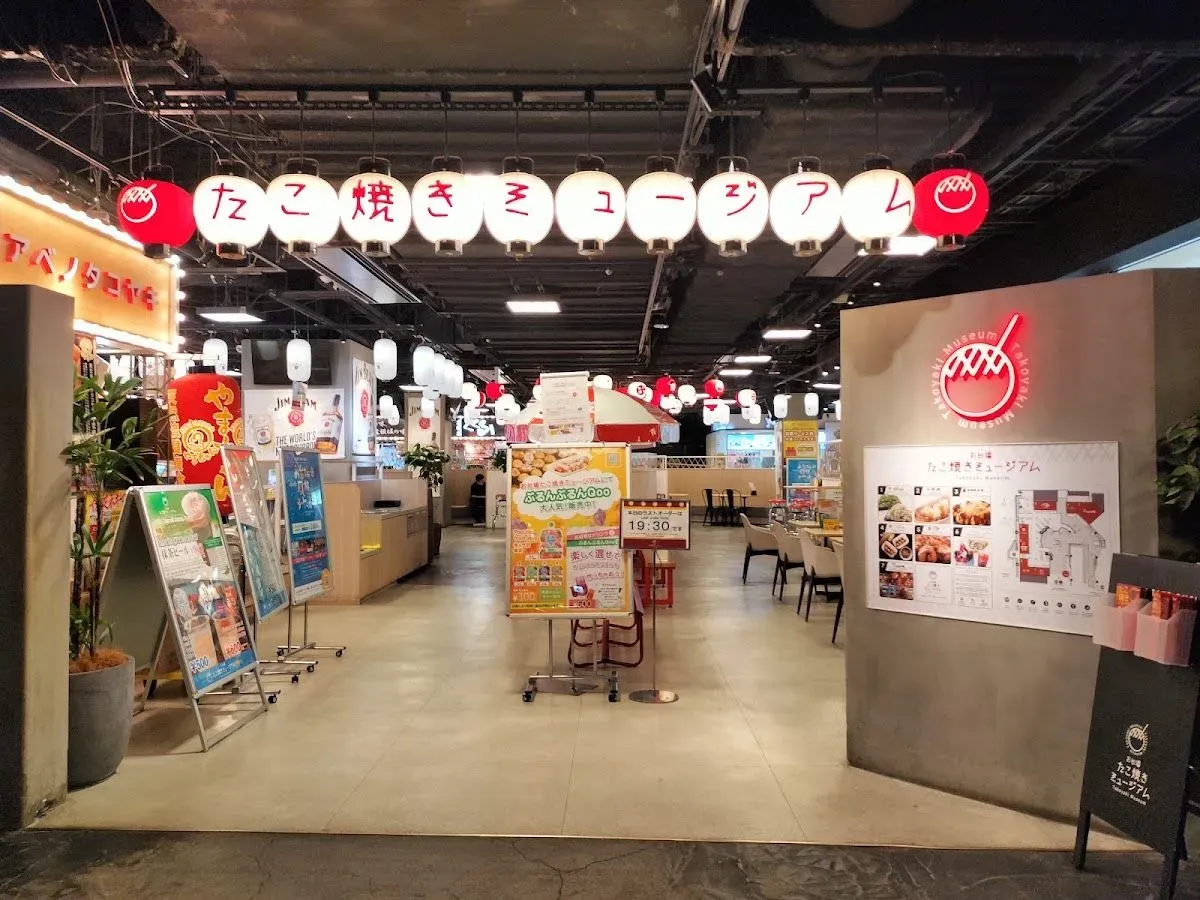
The Odaiba Takoyaki Museum gathers five acclaimed Osaka octopus-ball purveyors into a single hall on the fourth floor of DECKS, allowing visitors to taste regional variations ranging from sauce-free dashi dumplings created by Aizuya in 1933 to mayonnaise-drizzled street snacks by Kougaryu. This is not a historical museum with informational plaques, but an authentic food alley dedicated to Osaka's staple street food. The standout stall is Aizuya, the shop that invented takoyaki in 1933; their dumplings come bite-sized without sauce, mayonnaise, or bonito flakes, seasoned entirely with soy sauce and dashi simmered into the batter. Next door, Kougaryu serves the opposite: crispy shells loaded with sweet fruit sauce and heavy mayonnaise.
8. Fuji TV Building Hachitama Sphere — Kenzo Tange's Suspended Observatory
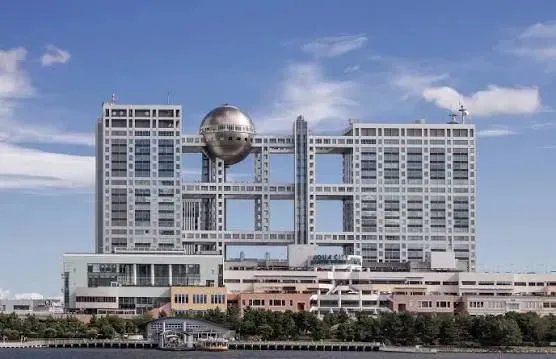
The Kenzo Tange-designed Fuji TV Building features Hachitama, a 1,200-ton titanium-clad spherical observation deck suspended 25 stories above Tokyo Bay that charges ¥700 for panoramic harbor views, production studio memorabilia, and an uncrowded vantage point rarely mentioned in mainstream tourist itineraries. Architect Kenzo Tange conceived the Fuji TV headquarters as a massive metallic lattice supporting a 32-meter titanium sphere suspended between two towers. An outdoor escalator takes you up to the seventh floor, where a high-speed elevator ascends directly into the globe's belly. The spherical windows look straight out over Tokyo Bay, the container terminals, and Rainbow Bridge with a fraction of the lines found at Shibuya Sky or Tokyo Skytree.
9. Yurikamome Monorail Front Car — The 270-Degree Loop Over Rainbow Bridge
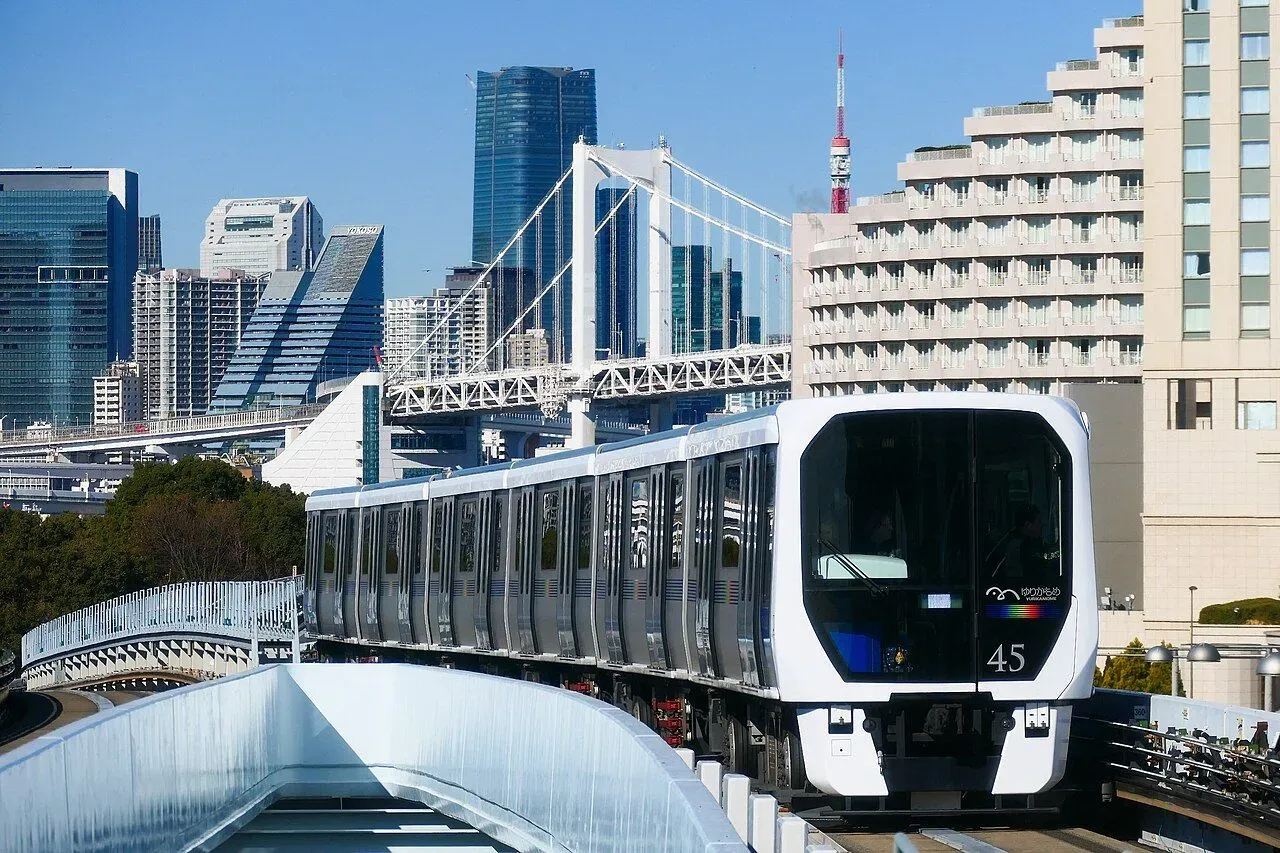
The driverless Yurikamome automated transit line provides panoramic front-window transit from Shimbashi Station across Tokyo Bay, carrying commuters through a dramatic 270-degree ascending spiral loop onto Rainbow Bridge before dropping directly into the modern Odaiba district for a standard ¥330 fare. Because the Yurikamome runs on automated rubber tires without a driver's cab, the front row of Car 1 functions like a private observation car. Boarding at Shimbashi Station puts you at the front of the train before it winds through Shiodome's skyscrapers, climbs the ramp onto Rainbow Bridge, and completes a sweeping corkscrew turn over the bay water. It provides an amusement-park-grade transit experience for the price of standard train fare.
Experience Tokyo's Waterfront with Wabisabi
Let our local guides show you past the tourist malls to Edo-era artillery batteries, hidden Showa arcades, and the best viewpoints across Tokyo Bay.
Book this tour →